In this article
The shape of the city
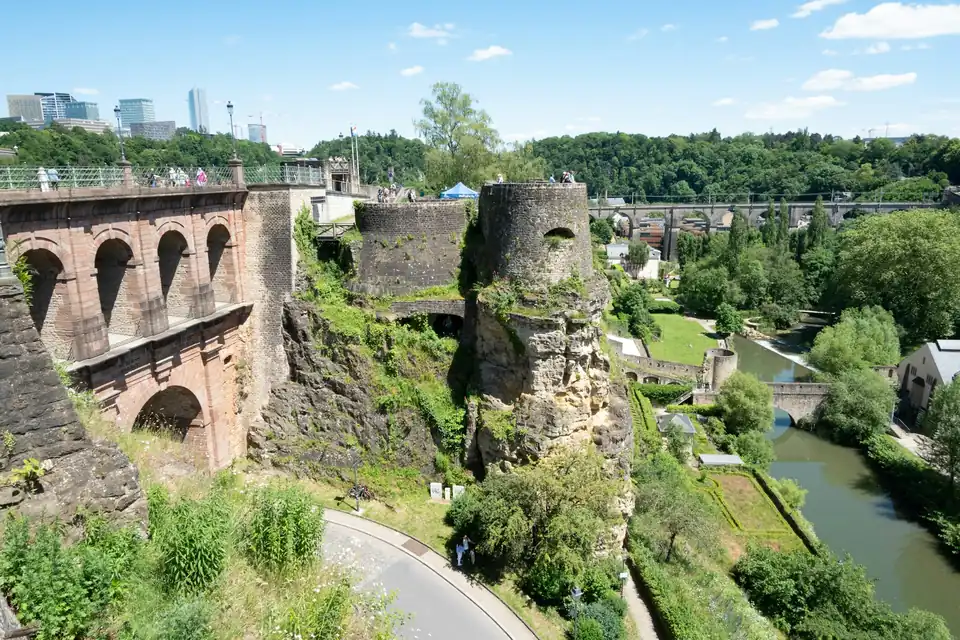
Luxembourg City sits on a plateau cut by two river valleys, the Alzette and the Pétrusse. That geography does more to define the quarters than any administrative boundary. Neighbourhoods that are a few hundred metres apart on a map can sit a hundred metres apart vertically, connected by a lift, a bridge or a long walk.
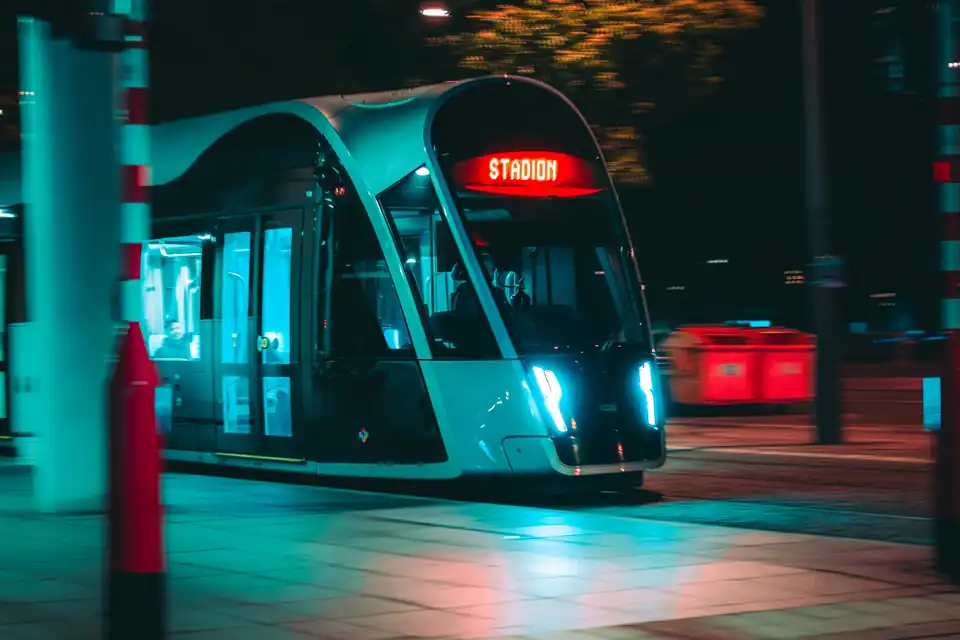
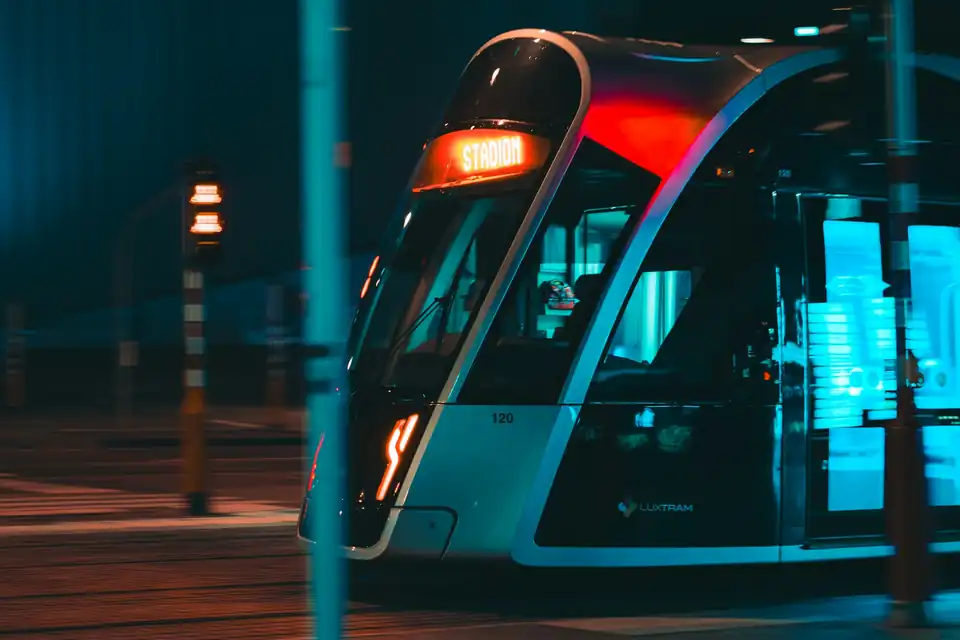
This is why the standard advice for a newcomer is to think in terms of transport lines rather than distances. The tram runs from the airport in the north-east through Kirchberg, Limpertsberg, Ville Haute and the Central Station down to Bonnevoie, Howald and Cloche d'Or in the south. That line is the spine of the city, and where a quarter sits in relation to it matters more than where it sits on a map.
The centre and the valleys
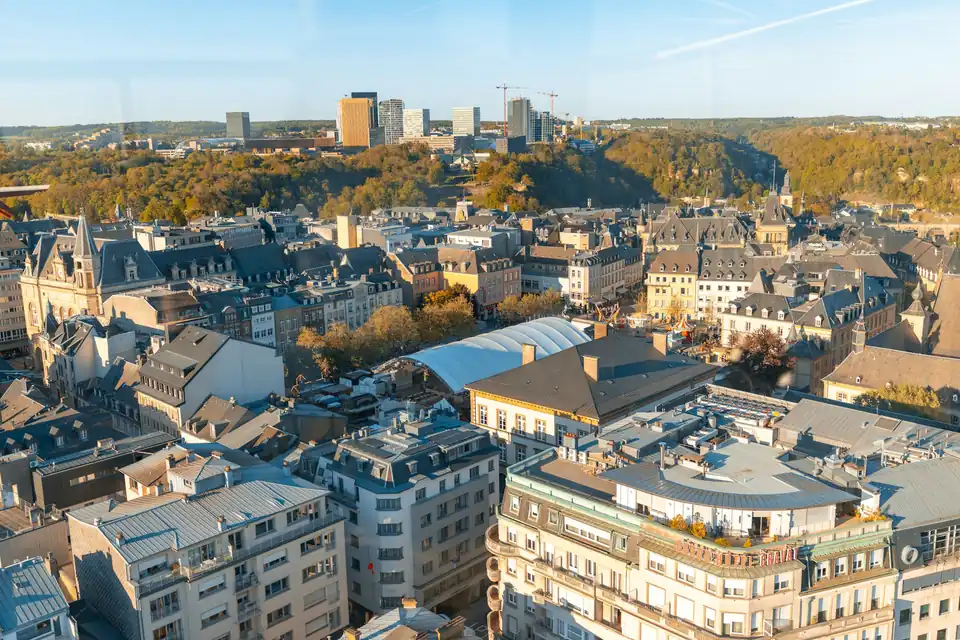
Ville Haute is the historic upper town: the pedestrianised shopping streets, the palace, the institutions. Living here means being at the centre of everything, with the constraints that implies on space and quiet.
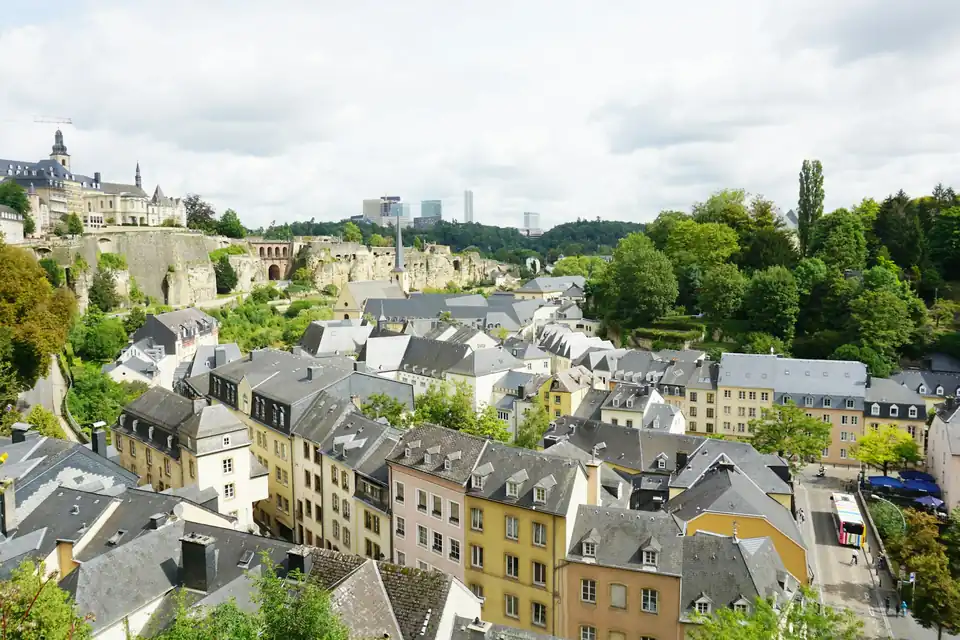
Below it, in the Alzette valley, sit Grund, Clausen and Pfaffenthal. These are the most photographed parts of Luxembourg and among the most atmospheric places to live in the country, with the caveat that valley living means steep access and a different relationship with daylight in winter. Clausen carries much of the city's nightlife. Pulvermühl continues the valley eastwards and is quieter and more industrial in character.
West: Belair, Merl, Hollerich
Belair is the city's most established residential address: wide streets, substantial houses, mature trees and the highest prices in the capital. It is quiet, green and family-oriented, and it is priced accordingly.
Merl sits alongside it with a similar residential character at a slightly gentler price point, popular with families and with good access to sports facilities and green space.
Hollerich is the outlier in the west: historically industrial, now one of the more actively changing parts of the city, with a mix of converted commercial buildings, cultural venues and new residential development. Worth watching.
North: Limpertsberg, Rollingergrund, Eich and beyond
Limpertsberg is one of the most sought-after quarters in the city: elegant streets, the Glacis fairground, the university campus, and a tram stop at Place de l'Étoile connecting directly to both Ville Haute and Kirchberg. It combines a genuinely residential feel with a five-minute journey to the centre, which is why demand is consistently high.
Rollingergrund runs down the valley to the north-west and is greener and quieter, with good bus connections and a noticeably calmer pace.
Further out, Eich, Dommeldange, Beggen, Mühlenbach and Weimerskirch form a band of quieter northern quarters. They offer more space for the money and a residential atmosphere, at the cost of a longer journey into the centre. Dommeldange has its own railway station, which materially improves its position.
East: Kirchberg, Neudorf, Cents, Hamm
Kirchberg is the plateau that holds the EU institutions, the banks, the Philharmonie, MUDAM and the largest shopping centre in the country. It is modern, purpose-built and extremely well connected. It is also the quarter people most often assume they should live in because they work there, and often the one they choose against once they realise how quick the tram is from elsewhere.
Neudorf sits below Kirchberg along the Alzette, mixing older village character with newer development, and offers a genuinely different feel a few minutes from the plateau.
Cents is residential, quieter and popular with families, on the eastern edge of the city. Hamm continues in the same direction and is among the calmest quarters in the capital.
South: Bonnevoie, Gare, Gasperich, Cessange
Gare is the station quarter: dense, central, extremely well connected and the most transient part of the city. It has the widest range of prices and the widest range of building quality in the capital.
Bonnevoie, immediately south of the station, is dense, international and among the better-value central quarters, with the tram running through it. We look at it in detail in our guide to living in Bonnevoie.
Gasperich contains Cloche d'Or, the newer business district, now at the southern end of the tram line and surrounded by substantial new residential development. Cessange sits to its west and remains more suburban and residential in character.
Quick reference by profile
A rough orientation rather than a rule. Every quarter contains exceptions, and a specific building matters more than its postcode.
| If you want | Start looking at |
|---|---|
| Best value with excellent transport | Bonnevoie, Gare, Hollerich |
| Elegant and central, high demand | Limpertsberg, Belair |
| Quiet and residential, family-oriented | Cents, Hamm, Merl, Cessange |
| Green and calm, still close in | Rollingergrund, Mühlenbach |
| Modern, purpose-built, walk to the office | Kirchberg, Gasperich |
| Atmosphere and historic character | Grund, Clausen, Pfaffenthal, Ville Haute |
| More space for the money | Eich, Dommeldange, Beggen, Weimerskirch |
Two practical notes on reading this table. Quarters that appear in the value column are not lower quality, they are denser and less fashionable, which in a city this small is largely a matter of reputation rather than substance. And the quarters that appear quiet are quiet in both senses: peaceful in the evening, and short of places to go on a Tuesday night.
How to choose
Four questions narrow the field faster than browsing listings.
- Where do you work, and which tram or bus reaches it? Transport is free, so the only cost is time. Optimise for connection, not distance.
- How much noise and density do you want? Gare and Bonnevoie are lively. Cents, Hamm and Rollingergrund are quiet. Both answers are valid.
- Are you renting a room or a whole home? Rooms concentrate in the denser central quarters. Family housing concentrates west and north.
- How long is your horizon? A first year in a well-connected room teaches you more about the city than any amount of research, and costs far less than a three-year lease in the wrong quarter.
Each quarter has its own page on our site with transport lines, amenities and who it suits, and you can browse them all from the neighbourhoods overview. If you would rather describe your commute and your budget and let us shortlist, get in touch.