Atmosphere
The district's village character comes through in St. Hubert's church and its fountain, the 'Haupeschbur', and the public park near the historic Collart Castle.
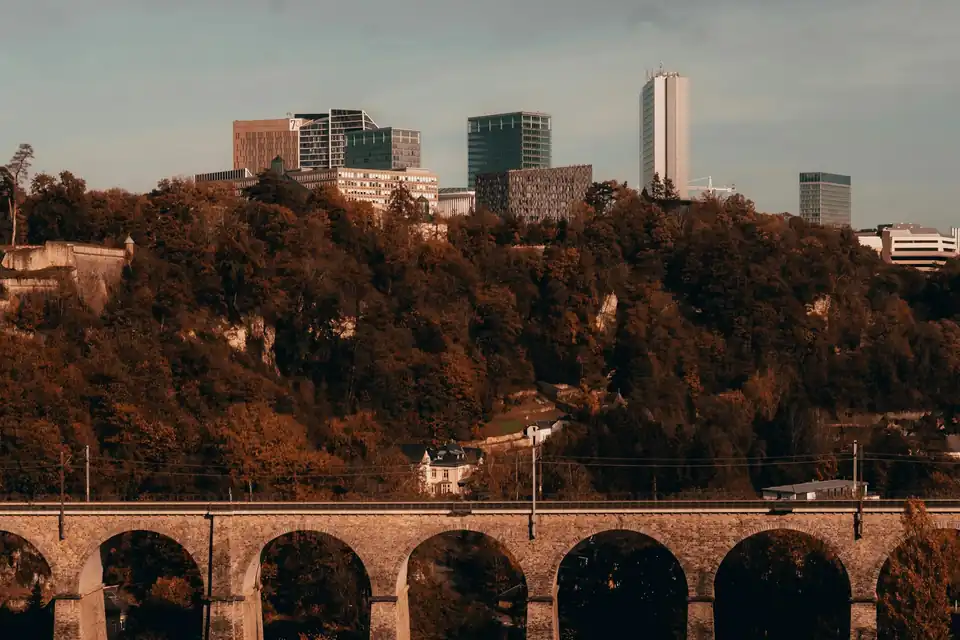
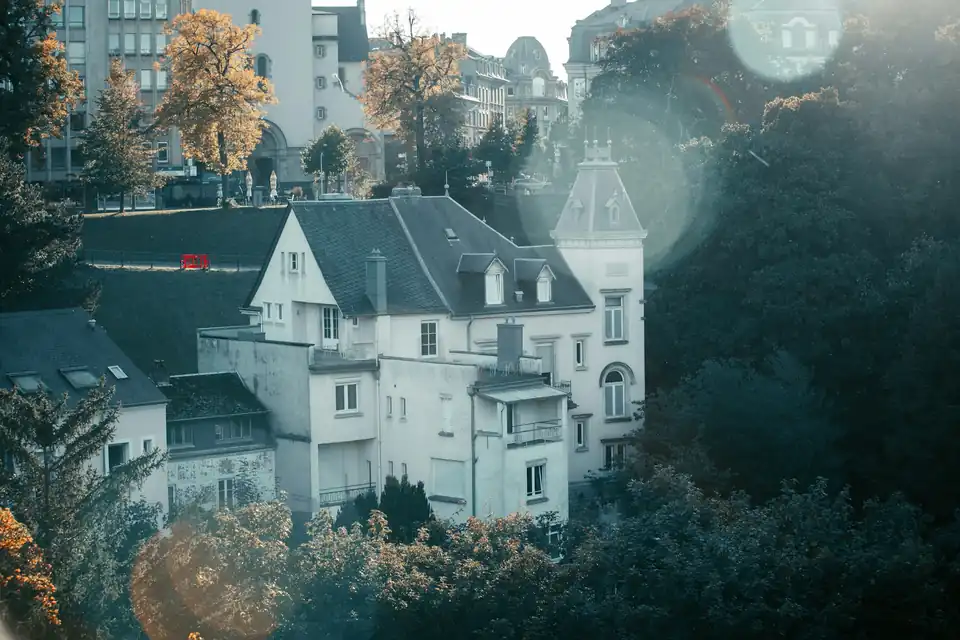
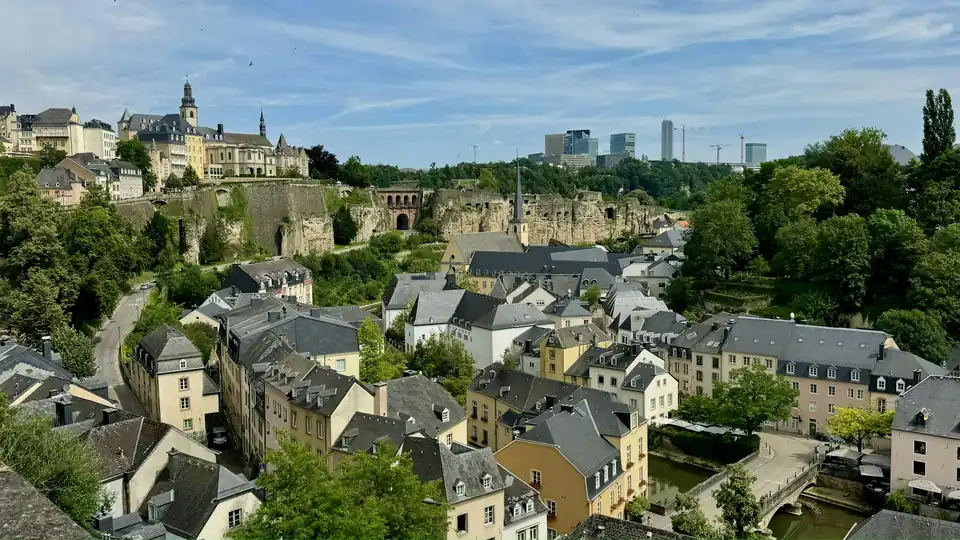
A strong option for professionals who want rail access and a quieter neighbourhood.
Dommeldange, in the north-east of the city, blends industrial heritage with nature - a village-like district built up around its stream and old mills.
“Dommeldange's mix of industrial history and greenery gives it real character.”
The Aura take on Dommeldange
The district's village character comes through in St. Hubert's church and its fountain, the 'Haupeschbur', and the public park near the historic Collart Castle.
Regular bus connections link Dommeldange to the city centre and to Kirchberg.
In short AVL bus lines, plus the Dommeldange CFL railway station
Reed-lined trails along the village stream, the park, and everyday local shops are all close by.
In short The railway station, Parc de l’Europe and nearby green areas make Dommeldange convenient for commuters who also value a village-like atmosphere.
Great for those who want a quieter, nature-adjacent home base within the city.
In short A strong option for professionals who want rail access and a quieter neighbourhood.
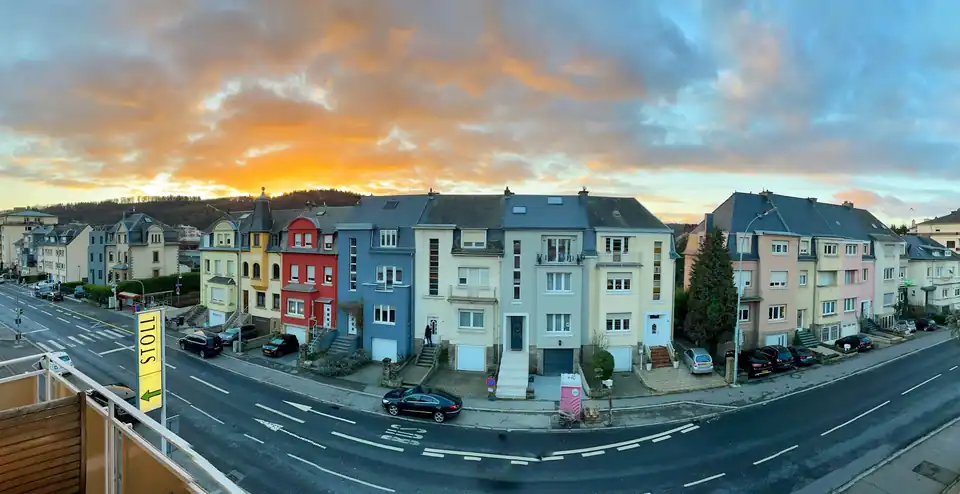
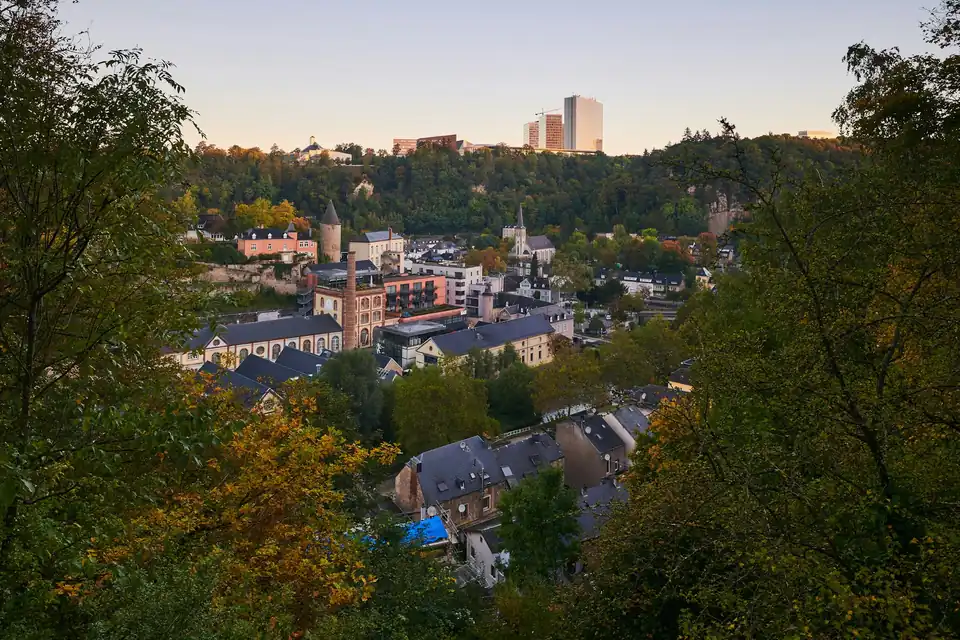
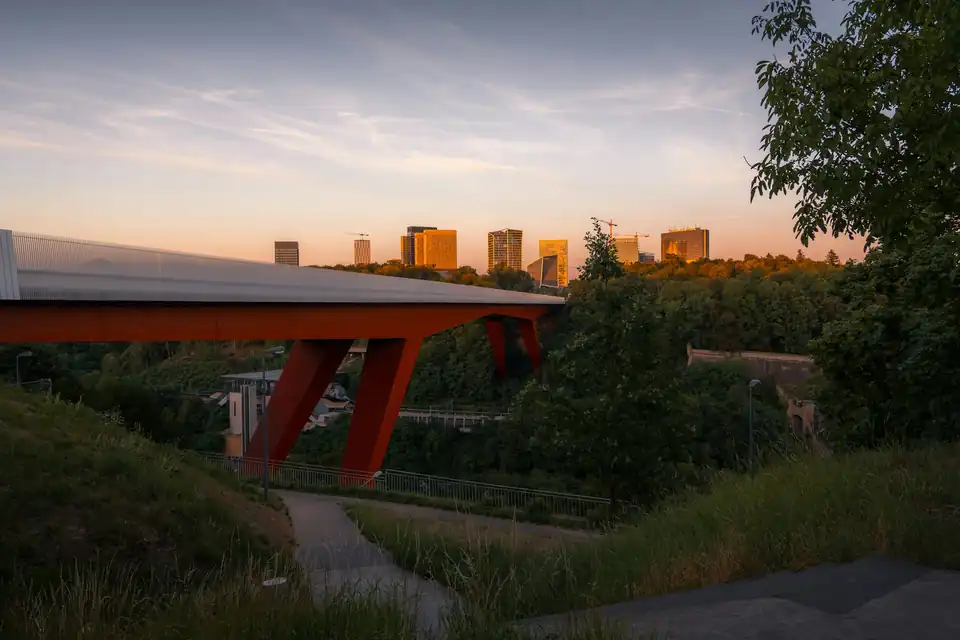
Every caption says exactly what the photograph shows. Where we let homes in Dommeldange, you will also see real photos from our listings.
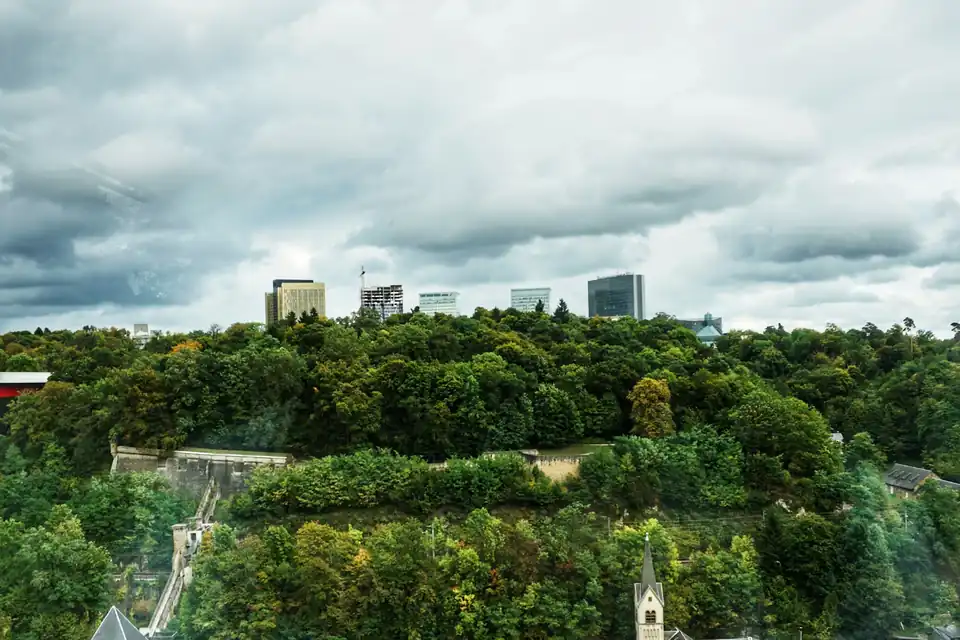
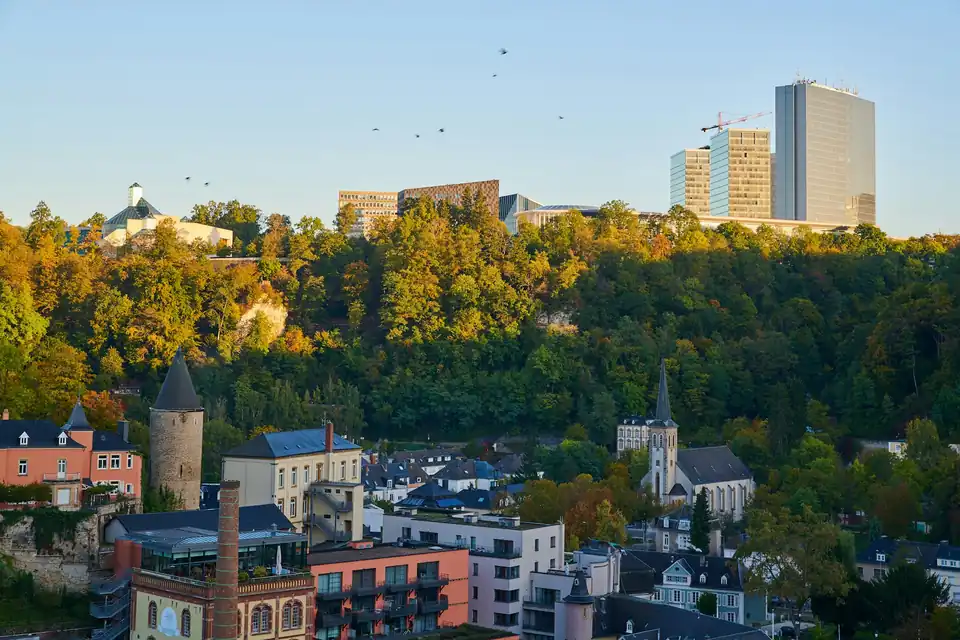
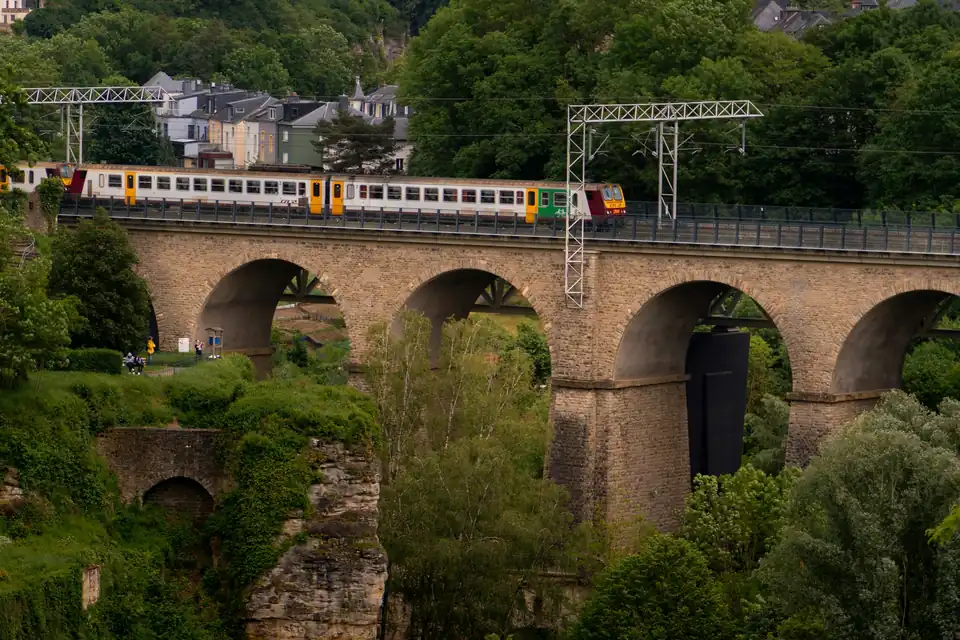
Dommeldange sits in the northern valley and is defined by its railway station, which puts it on the national rail network without being in the middle of the city. The quarter combines residential streets with hotels and commercial buildings that have grown up around the station and the road north.
The stock is mixed, with older valley housing alongside later apartment building. Rents are typically more moderate than on the plateau, and the station is the main reason people choose it.
Valley quarters trade daylight and views for convenience, and Dommeldange is no exception. The main road and rail corridor bring traffic and noise to some streets, so the specific address matters more here than the quarter name.
The quarter is served by the AVL bus network rather than the tram, with tram connections a short ride away. All public transport in Luxembourg is free.
| Residents | 3,106 |
|---|---|
| Area | 2.36 km² |
| Density | 1,319 residents per km² |
| Part of the city | North |
Population and area: district figures of the City of Luxembourg, end of 2025.
Dommeldange has been a place of metal production since at least the seventeenth century, when ore was smelted in kilns using charcoal from the Grünewald forest. In 1865, the Metz family founded the Forges d'Eich, Metz & Cie, and in the following years four coke-fired blast furnaces were built here. In 1879 the company acquired the licence for the Thomas process, and its chief chemist Jean Meyer carried out some of the first European tests of this method of removing phosphorus from iron, a turning point for the steel industry of the region.
At the start of the twentieth century, Dommeldange became a pioneer of electric steelmaking: gas plants with electricity generators were installed in 1904 and 1907, surplus power was supplied to Luxembourg City, and from 1908 electric furnaces produced high-quality alloy steels for tools, cars and aircraft. The railway station was essential to that industry.
Around 3,100 people live in Dommeldange, on some 2.4 square kilometres, much of it green. Most residents are not Luxembourgish, and the quarter mixes long-standing families with newcomers who value the station and the forest.
Housing mixes older valley houses and later apartment buildings. Rents are generally more moderate than on the plateau. The station and the proximity to Kirchberg are the main reasons people choose it. See our article on the northern valley quarters.
Everyday shops, a few restaurants and hotels near the station cover the basics. Kirchberg's shopping centre is close by bus.
The park, the stream and the Grünewald forest make Dommeldange one of the greenest quarters in the north. Schools are local and in neighbouring quarters.
Dommeldange station offers trains on the national network. Bus lines serve the centre and Kirchberg. By car, the valley road leads north out of the city. All public transport is free.
Dommeldange is home to about 3,106 residents on 2.36 km², a density of roughly 1,319 people per km², which makes it the 19th most densely populated of the 23 quarters in our guides. Around 27% of residents hold Luxembourgish nationality, lower than the city-wide share of about 31% (137,696 residents at the end of 2025, according to the City of Luxembourg). Like the capital as a whole, it is a genuinely international place to live.
Dommeldange sits in the northern valley, and its history is industrial. In the seventeenth century, iron was already produced here using charcoal and local ore. In 1865 the Metz family founded the Forges d'Eich, Metz & Cie, whose blast furnaces and later electric steelworks made the valley one of the early centres of Luxembourg's steel industry. Much of that past has gone, but the quarter's layout still follows it. A walk starts at the railway station, the main reason many residents choose Dommeldange, and continues to St Hubert's church and its fountain, the Haupeschbur, then to the park near the historic Collart castle, with trails along the village stream.
Dommeldange is a practical quarter: its rhythm follows commuters on the rail line rather than events. The park and the stream paths make spring and summer pleasant; winters are quieter. Hotels near the station and the main road give the area a slightly different feel from the purely residential quarters around it.
| What residents appreciate | What to weigh up |
|---|---|
| Railway station for commuters, especially northwards | Traffic and railway noise on some streets |
| Rents generally more moderate than on the plateau | Valley position means less winter light |
| Park and stream paths close by | Limited shops and restaurants |
| Quick road access north | A climb to reach the plateau quarters |
| Quarter | Residents | People per km² | Luxembourgish | Tram in the quarter |
|---|---|---|---|---|
| Dommeldange | 3,106 | 1,319 | 27% | No, buses |
| Beggen | 3,844 | 2,249 | 34% | No, buses |
| Eich | 3,079 | 4,873 | 30% | No, buses |
| Weimerskirch | 2,471 | 2,236 | 32% | No, buses |
Population and area: City of Luxembourg district figures, end of 2025. Luxembourgish share rounded.
Dommeldange combines an industrial history, a forest and a railway station inside the capital. For train commuters and lovers of green space, it is excellent value.
Dommeldange is in the north of the city, in the Alzette valley. Dommeldange sits in the northern valley and is defined by its railway station, which puts it on the national rail network without being in the middle of the city.
The stock is mixed, with older valley housing alongside later apartment building. Rents are typically more moderate than on the plateau, and the station is the main reason people choose it.
Valley quarters trade daylight and views for convenience, and Dommeldange is no exception. The main road and rail corridor bring traffic and noise to some streets, so the specific address matters more here than the quarter name.
The quarter is served by the AVL bus network rather than the tram, with tram connections a short ride away. All public transport in Luxembourg is free.
We do not have a listing in Dommeldange at this moment. Availability changes regularly, so it is worth checking the full rental portfolio, or telling us what you are looking for on WhatsApp so we can contact you when something in this quarter comes up.
Famiglie e professionisti che preferiscono un’atmosfera più locale e verde.
Autobus AVL e stazione CFL di Dommeldange.
Piccoli servizi locali e collegamenti verso centro e Kirchberg.
Parco, sentieri e aree verdi lungo il torrente caratterizzano il quartiere.
Più tranquillo e di quartiere, con meno pressione turistica.
See the existing Aura listings for the homes and rooms currently offered in and around this quarter.

Install the Aura app in a few seconds: listings, neighbourhood guides and the Journal, one tap away, even with a weak connection.