In this article
What is covered
The exemption applies to the entire territory of the Grand Duchy and effectively the entire network: national and regional buses, municipal city buses, the Luxembourg City tram, and CFL trains in second class. It applies equally to residents, cross-border commuters and tourists.
The scale of the policy is easier to appreciate in numbers. Ticket sales before the reform amounted to roughly €41 million a year against a network budget of around €500 million, meaning fares covered only a small fraction of the cost of running the system while consuming a disproportionate share of its administration and enforcement.
The practical effect for a resident is that transport disappears from the monthly budget entirely. In a country where a parking space in the city can cost more per month than a mobile contract costs in a year, that is not a marginal saving.
The three things that still cost money
First class on CFL trains
Second class is free; first class is not. If you want the first-class carriage you need a paid national first-class product, increasingly sold digitally through the CFL app rather than at a counter.
Journeys that continue beyond the border
Free travel ends at the frontier. A cross-border journey requires a ticket for the portion outside Luxembourg, while the Luxembourg portion remains free. There are notable exceptions: second-class trains to and from Athus in Belgium, and Audun-le-Tiche and Volmerange-les-Mines in France, remain free.
On a cross-border train you must hold your ticket before the last stop inside Luxembourg, because that is where inspection takes place. This catches out a lot of weekend travellers.
Cross-border buses
Cross-border bus services use a single RegioZone fare structure, with a two-hour ticket, a monthly and an annual option. The Saarbrücken Express is priced separately.
The tram, end to end
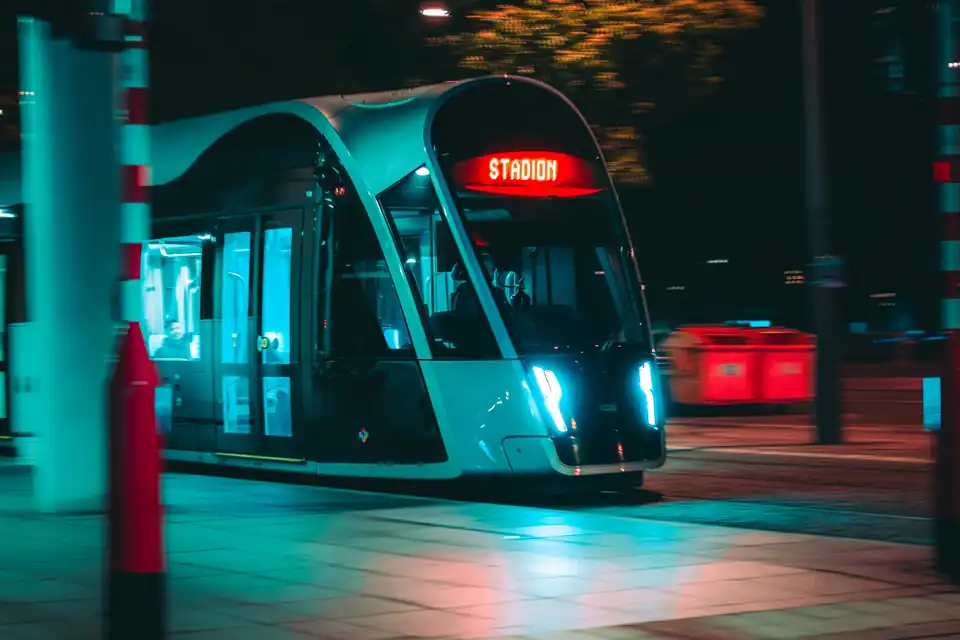
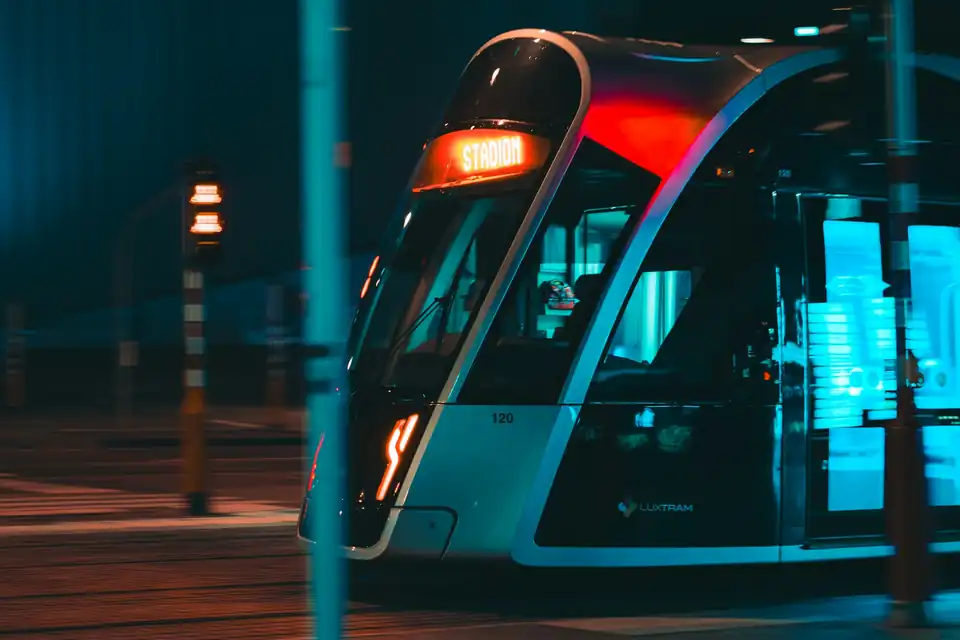
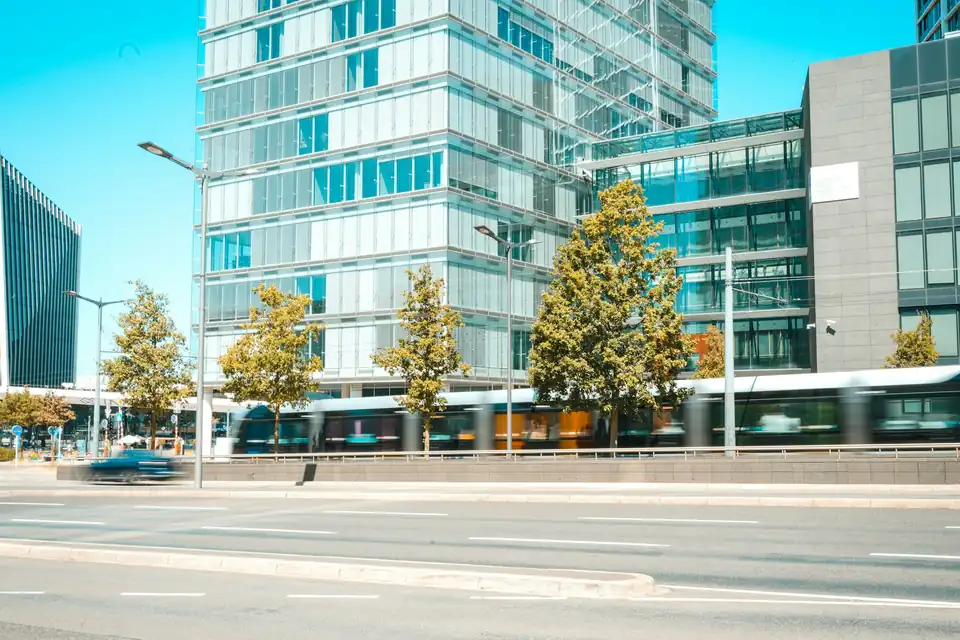
Luxembourg City's tram opened in December 2017 and was completed in stages over eight years. The line now runs from Luxembourg Airport in the north-east to the Cloche d'Or business district in the south, with 24 stations across 16 kilometres and a capacity of 10,000 passengers per hour in each direction.
The sequence of extensions explains the geography of the city today:
- 2017: first section across Kirchberg
- July 2018: across the Grand Duchess Charlotte Bridge to Place de l'Étoile in Limpertsberg
- December 2020: through Ville Haute, across the Adolphe Bridge and along Avenue de la Liberté to the Central Station
- September 2022: from the station into Bonnevoie
- July 2024: onward via Howald to Cloche d'Or in Gasperich and the national stadium
- March 2025: eastwards from the Kirchberg depot to the airport
The airport tram stop connects with several city and regional bus lines, which makes arriving in Luxembourg unusually painless: you land, you walk to the tram, and you reach the city centre without a ticket or a taxi.
Planning a journey
The official multimodal route planner is published by the Mobilitéitszentral at mobiliteit.lu and through the Mobilitéit app. It covers buses, tram and rail together, which matters in a city where a typical journey combines two of the three. CFL publishes its own app for trains, with first-class sales integrated.
One change worth knowing: since 1 January 2026 the mKaart is no longer valid for daily journeys and tickets can no longer be bought on buses or at CFL sales centres. For ordinary second-class travel this affects nothing, because there is nothing to buy. It matters only if you are dealing with one of the paid exceptions.
What this means when choosing where to live
In most European capitals, the commute has a monthly price, and living further out is a trade between rent and transport cost. In Luxembourg that trade does not exist. Transport is free everywhere, so the only currency is time.
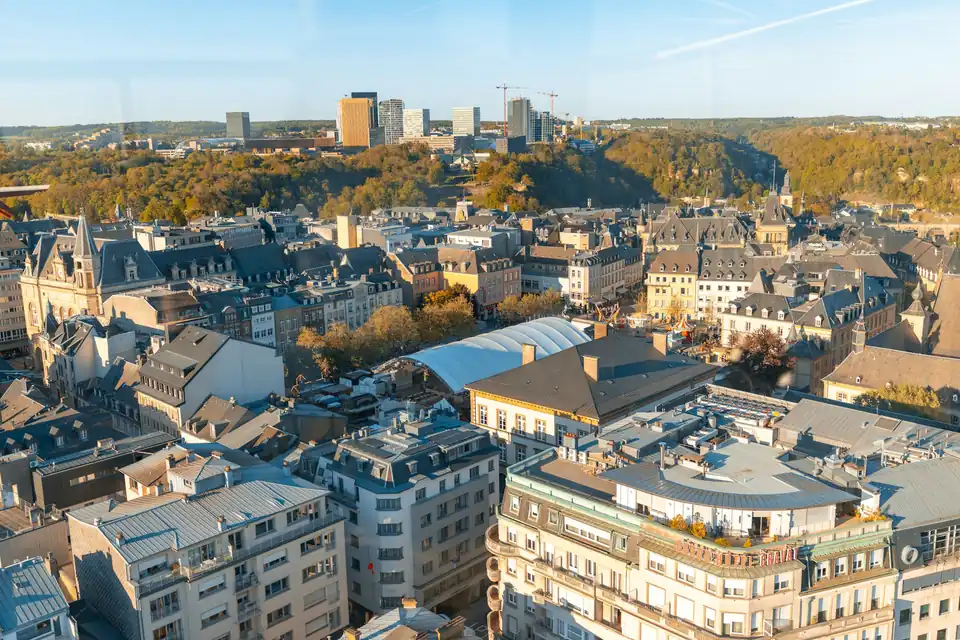
The consequence is that connection quality matters far more than distance. Luxembourg City is built across steep valleys, and two addresses that look close on a map can be an awkward journey apart. A room in Bonnevoie on the tram corridor will reach Kirchberg faster and more reliably than something nominally closer but served only by a bus that gets caught in valley traffic.
When we describe a room's location on our listings, the tram and bus lines are listed for exactly this reason. It is the number that determines your daily life, and it is free.
Practical details residents get wrong
- Carry identification. Even though there is no ticket, passengers must be able to show a personal identity document to a conductor on request.
- Luggage and pets travel free. There is no supplement.
- Bikes travel free on most CFL services off-peak, though some regional services apply peak restrictions or a small fee.
- Park and Ride sites on the periphery are free within posted time limits and connect directly to bus, tram or rail, which is the standard solution for people who drive in from the region.
- Free does not mean unlimited capacity. The tram between the station and Kirchberg at 08:15 is busy, and planning ten minutes either side of the peak makes a real difference.
Bikes, lifts and the vertical city
Luxembourg City's topography makes cycling less obvious than in a flat capital, but the network has expanded considerably and the vel'OH! bike-share scheme covers the city with electrically assisted bikes. Access to it is one of the remaining uses of the mKaart.
The city also runs a set of pieces of vertical infrastructure that function as public transport in their own right and are free to use: the Pfaffenthal panoramic lift connecting the upper town to the valley, and the funicular linking Pfaffenthal-Kirchberg station to the Kirchberg plateau. If you live in one of the valley quarters, these are not tourist attractions, they are your commute.
Park and Ride sites on the periphery complete the picture for anyone driving in from the region: free within posted time limits, and connected directly to bus, tram or rail.
Why it matters more than it sounds
Free transport is often reported as a headline curiosity. Lived daily, it is something else: it removes a decision from every journey. You do not calculate whether the trip is worth the fare, you do not maintain a pass, and you do not need a car to live in the capital.
For anyone weighing up neighbourhoods, that shifts the question from cost to connection. Our neighbourhood guides set out the transport links for each quarter, which is the right place to start.