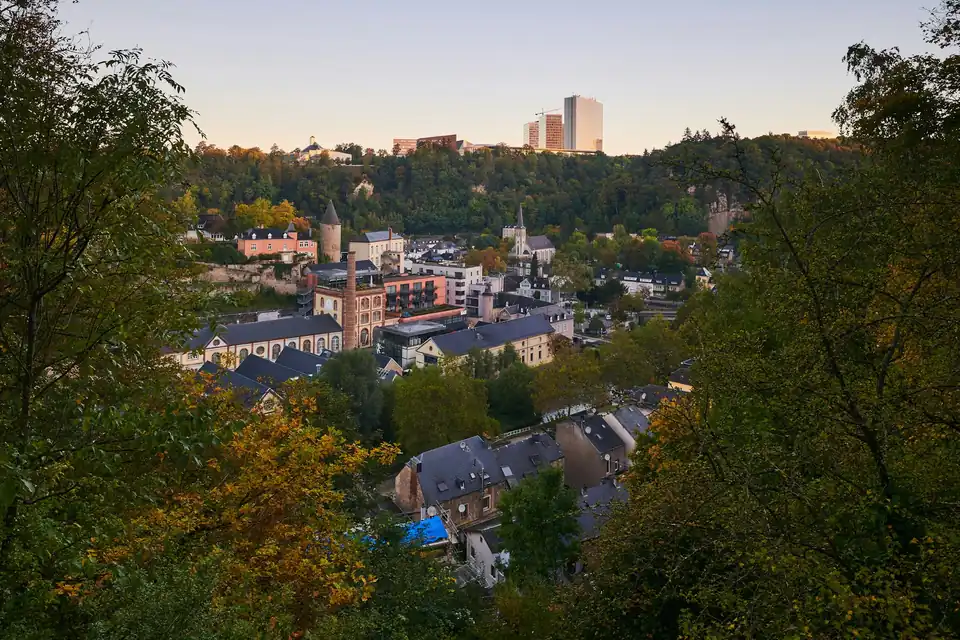
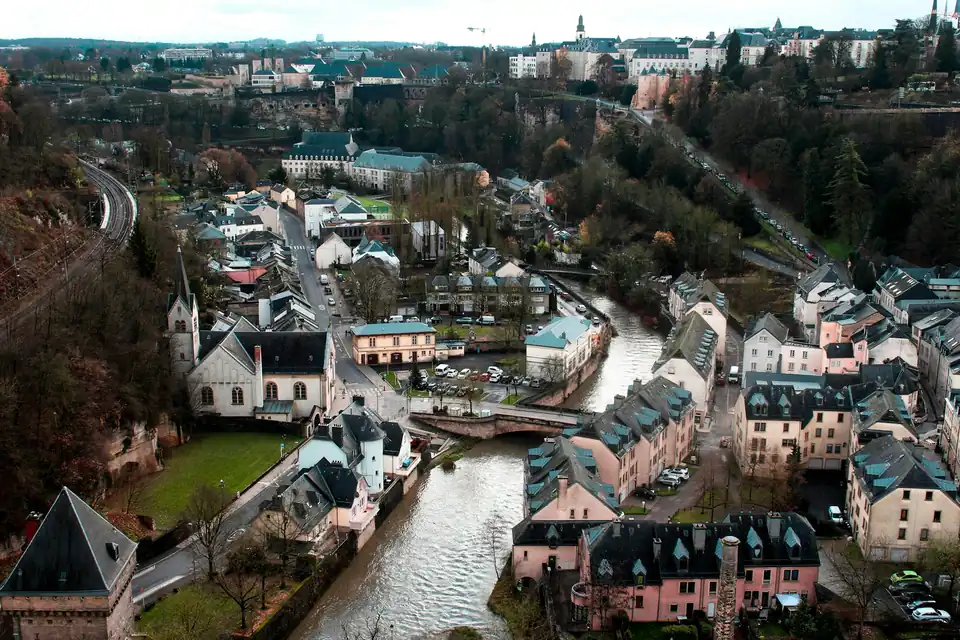
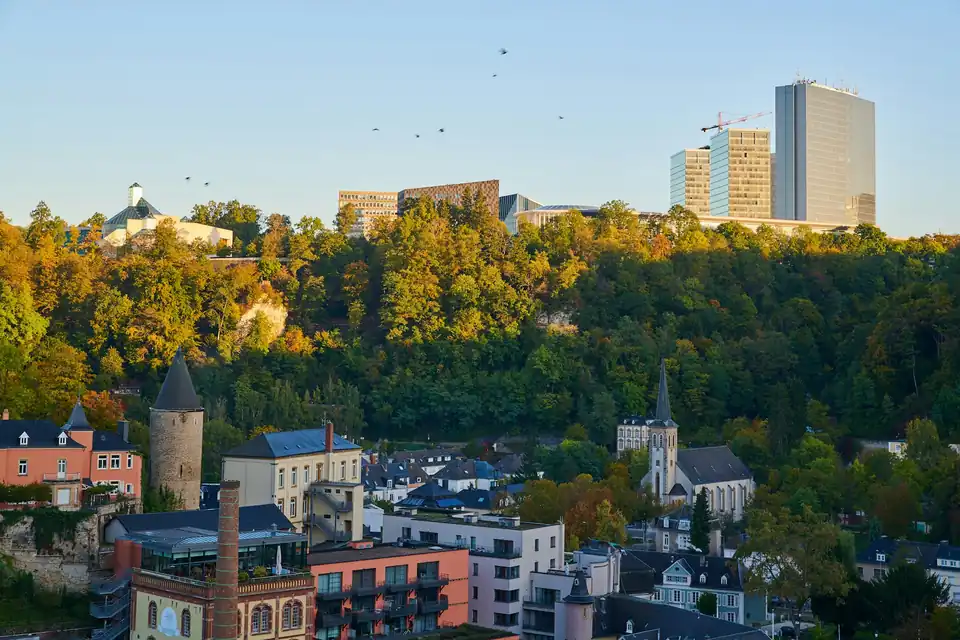
Eich is one of the older settlements absorbed into the city, and it still reads as a village core with later streets built around it. It sits in the north, close to Dommeldange and Beggen, on the slope between the valley floor and the higher ground.
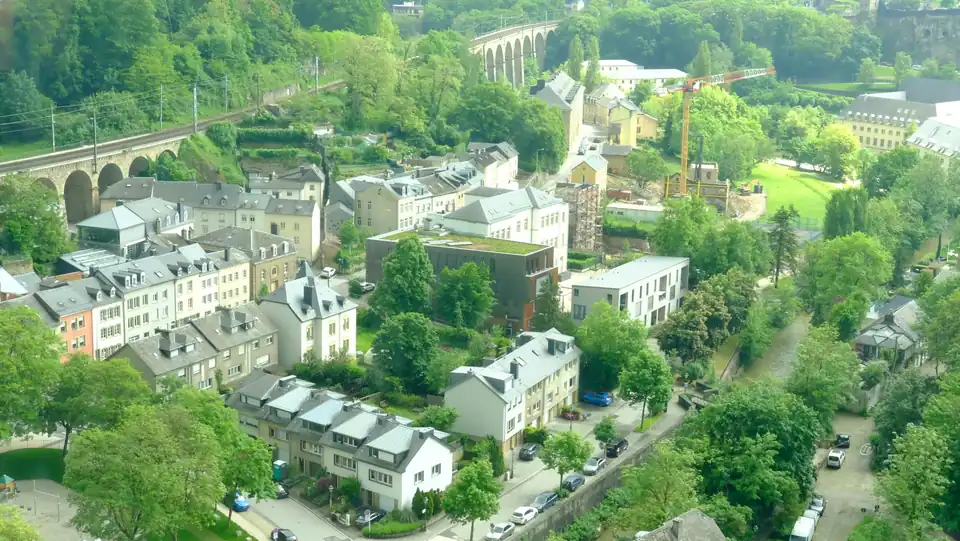
Housing is largely older, with terraced and semi-detached houses and small apartment buildings. It is a quarter of ordinary residential streets rather than of new developments, and it is priced accordingly.
Eich is quiet and unremarkable in the best sense, but the topography is uneven and services are limited to daily basics. Anyone wanting choice in shops or restaurants will be travelling for it.
The quarter is served by the AVL bus network rather than the tram, with tram connections a short ride away. All public transport in Luxembourg is free.
The complete guide to Eich
Key figures| Residents | 3,079 |
|---|
| Area | 0.63 km² |
|---|
| Density | 4,873 residents per km² |
|---|
| Part of the city | North |
|---|
Population and area: district figures of the City of Luxembourg, end of 2025.
History in brief
Eich was an independent commune until 1 July 1920, when it was merged into Luxembourg City. Until 1849 the commune of Eich also included Rollingergrund, which then became a commune in its own right. The name of the country's historic ironworks, the Forges d'Eich, founded by the Metz family in 1865, recalls the commune's industrial importance in the valley around Dommeldange.
Streets and landmarks
- Place Dargent, known locally as the Eecher Plaz, the heart of the quarter with everyday services around it.
- Village streets of traditional facades on the slopes between the valley and the higher ground.
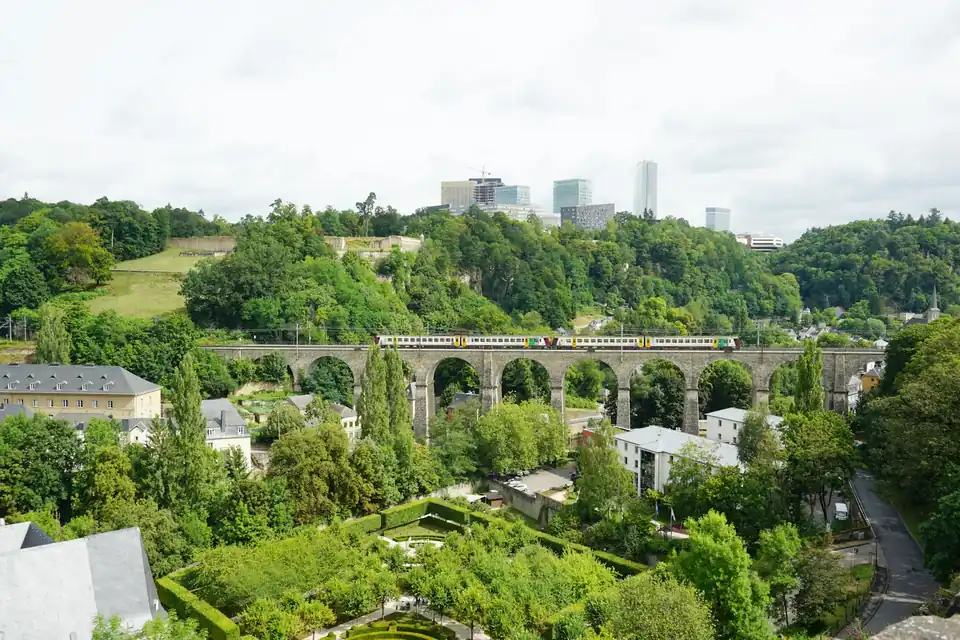
- The Alzette valley and its green edges.
Who lives here
Around 3,100 people live in Eich, on just over 60 hectares, which makes it compact and relatively dense for a northern quarter. Most residents are not Luxembourgish, but the quarter keeps a strong local identity around its square.
Housing and the rental market
Eich's housing is largely older: terraced and semi-detached houses, and small apartment buildings. New developments are few. Prices are generally below the plateau quarters, which makes Eich a sensible choice for people who want a real neighbourhood close to the centre without paying central prices. See our article on the northern valley quarters.
Shopping, food and daily services
Around the Eecher Plaz, residents find daily basics: bakery, small shops and cafés. For wider choice, Limpertsberg, the old town and Kirchberg are close.
Families, schools and green space
Primary schooling is available locally, and green spaces along the valley are close. The quarter's hills make pushchairs and bicycles more demanding.
Getting around in practice
Bus lines link Eich to the centre, the station and Kirchberg. The Pfaffenthal funicular and railway station and the Kirchberg tram are nearby. Dommeldange station is a short distance north. All public transport is free.
Before you sign: what to check in Eich
- Slopes. Many streets are steep.
- Distance from the main valley road. It affects noise.
- Older buildings. Check insulation and heating.
Who lives in Eich
Eich is home to about 3,079 residents on 0.63 km², a density of roughly 4,873 people per km², which makes it the 5th most densely populated of the 23 quarters in our guides. Around 30% of residents hold Luxembourgish nationality, close to the city-wide share of about 31% (137,696 residents at the end of 2025, according to the City of Luxembourg). Like the capital as a whole, it is a genuinely international place to live.
A walk through Eich
Eich was a separate commune until 1 July 1920, when it merged with the city, and before 1849 it even included Rollingergrund. Its heart is Place Dargent, the Eecher Plaz, and a walk naturally starts there, with everyday services around the square. From there, streets of older terraced and semi-detached houses climb the slope between the Alzette valley floor and the higher ground towards Mühlenbach and Limpertsberg. Heading east you reach the valley and the paths along the river; heading north, Dommeldange and Beggen continue the string of former villages along the Alzette.
Eich through the year
Eich keeps the rhythm of a village absorbed into a city: quiet, local and without major events. Its closeness to both the centre and Kirchberg means that residents go elsewhere for concerts, festivals and nightlife, and come back to a calm street in the evening.
Advantages and trade-offs
| What residents appreciate |
What to weigh up |
| Village-like square and calm residential streets |
Hilly, uneven streets |
| Close to the centre and to Kirchberg |
Services limited to daily basics |
| Generally lower rents than the plateau |
Older housing stock |
| A settled, local neighbourhood |
Bus-based public transport |
Eich compared with its neighbours
| Quarter |
Residents |
People per km² |
Luxembourgish |
Tram in the quarter |
| Eich |
3,079 |
4,873 |
30% |
No, buses |
| Weimerskirch |
2,471 |
2,236 |
32% |
No, buses |
| Pfaffenthal |
1,380 |
3,678 |
39% |
Funicular to the tram |
| Dommeldange |
3,106 |
1,319 |
27% |
No, buses |
Population and area: City of Luxembourg district figures, end of 2025. Luxembourgish share rounded.
Practical tips for your first weeks in Eich
- Walk the route from the home to the bus stop with shopping bags in mind; slopes matter.
- Ask about heating and insulation in older houses.
- Use Place Dargent's services for daily needs and plan bigger shopping elsewhere.
- If you work at Kirchberg, test the journey across the valley at rush hour.
The Aura view
Eich is an ordinary, pleasant neighbourhood in the best sense: a village square, reasonable prices and the city centre and Kirchberg a few minutes away.
We do not have a listing in Eich at this moment. Availability changes regularly, so it is worth checking the full rental portfolio, or telling us what you are looking for on WhatsApp so we can contact you when something in this quarter comes up.