In this article
Where Belair is
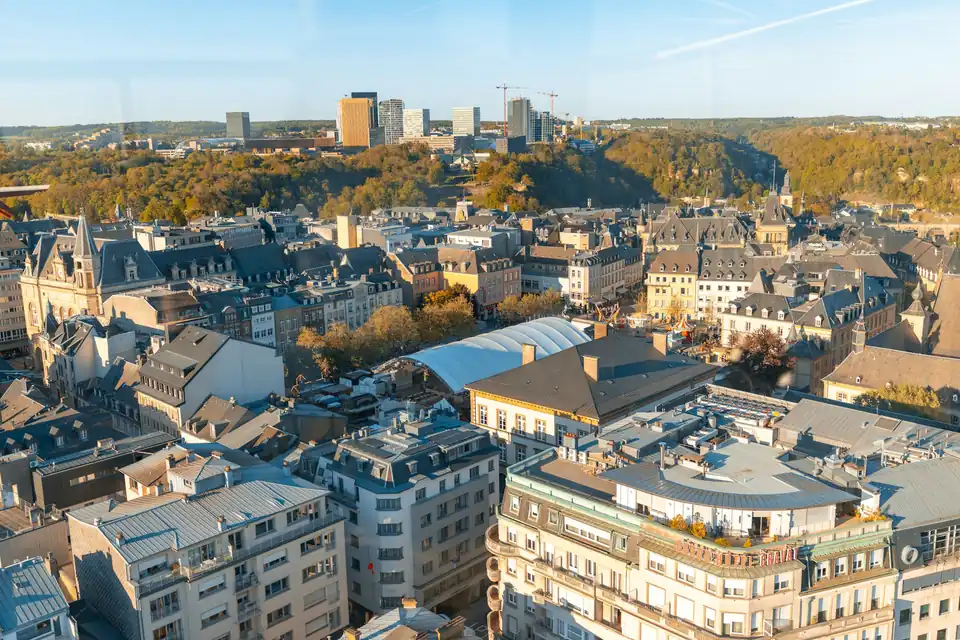
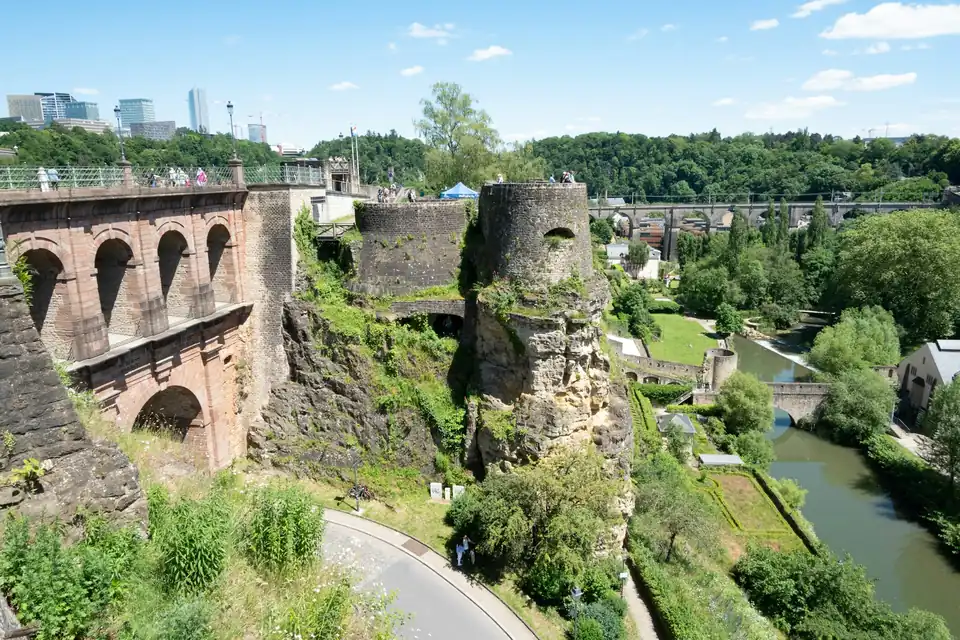
Belair occupies the plateau west of the historic centre, bounded roughly by the Pétrusse valley to the south and running out towards Merl in the west. It is close enough to Ville Haute to walk in, far enough out to be genuinely residential, and elevated enough to avoid the valley constraints that affect Grund and Clausen.
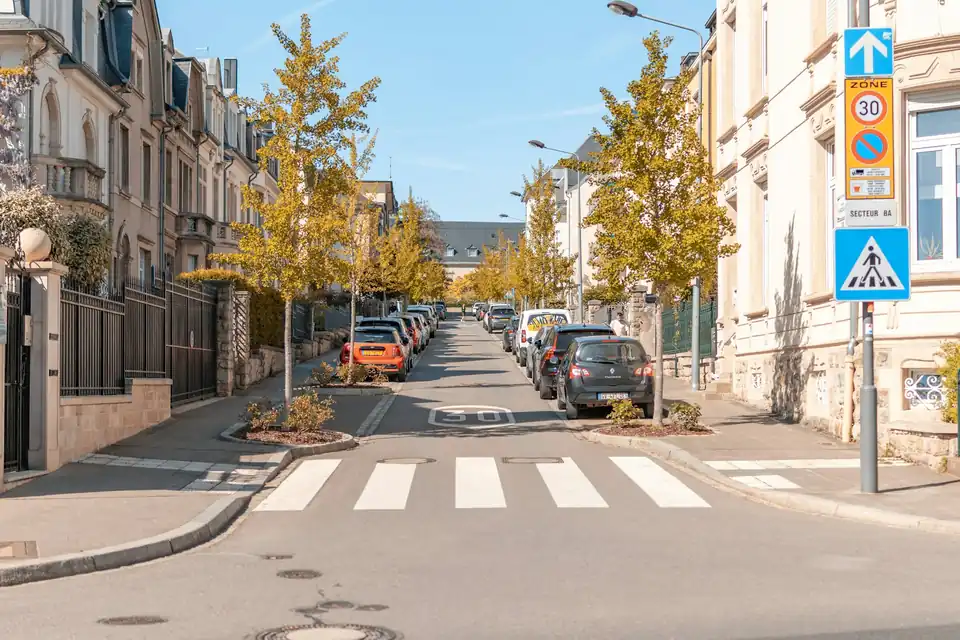
The quarter took its present form largely in the first half of the twentieth century, and it shows. Wide streets, substantial detached and semi-detached houses, belle époque and interwar villas, mature street trees, generous gardens. It looks like what it is: a district built for people with money, in a period when land near the centre was still available.
What the premium buys
Four things, in roughly this order of importance.
Space, in a country that has very little of it
Luxembourg City is small and constrained by topography. Belair has detached houses with gardens within twenty minutes' walk of the national parliament. That combination barely exists anywhere else in the capital, and scarcity is the entire story of Luxembourg property.
Quiet
Belair carries residential traffic rather than through traffic. It has no station, no nightlife district and no major commercial corridor running through its core. For households with young children, that is not a minor feature.
Green space
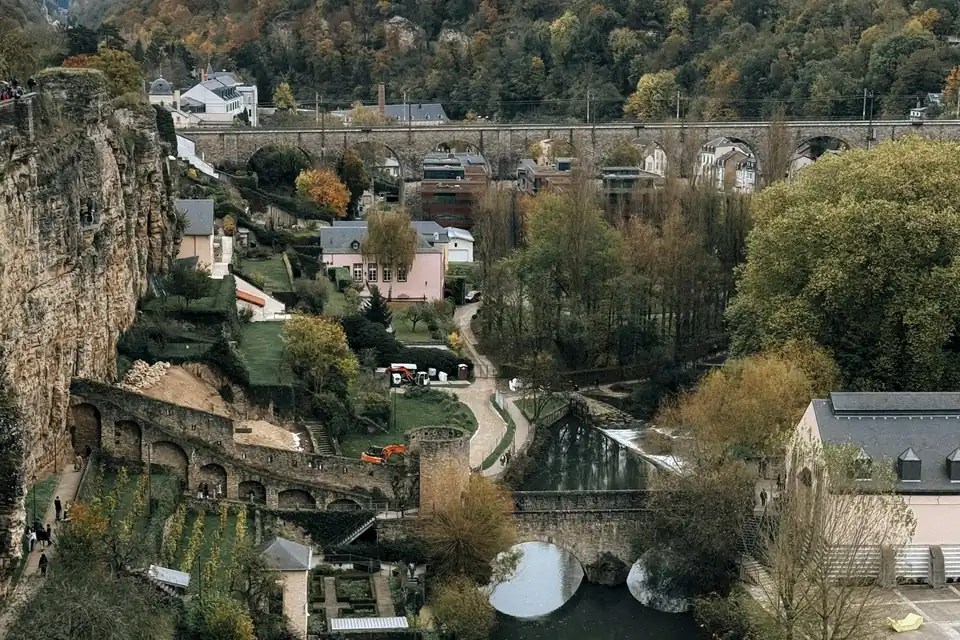
The Parc de Merl sits on its western edge, and the quarter itself is unusually green for a central district, with tree-lined avenues and private gardens forming a continuous canopy. The Pétrusse valley below adds walking and running routes on the doorstep.
Proximity without exposure
You can walk to the centre. You are not in it. That is the specific proposition, and it is the one that families and senior professionals pay for.
The supply constraint
This is the mechanism most explanations miss. Belair is expensive not only because it is desirable but because it is effectively finished.
The quarter is fully built out. There is no development land of consequence, and the existing stock is dominated by houses that owners hold for decades. What comes to market in a given year is a small number of properties, and demand for them substantially exceeds supply. Where new apartment buildings do appear, they are typically infill or replacement projects at the top of the market.
Compare this with Gasperich, where the Cloche d'Or development added thousands of new residential units within a decade, or Hollerich, where industrial land is being converted. Belair has no equivalent release valve, and prices behave accordingly.
Who lives there
Belair's population skews towards established households: families with school-age children, senior professionals in banking, law and the institutions, and the diplomatic community. Several embassies and residences are located in or near the quarter, which reinforces both its character and its price floor.
It is not a quarter of young arrivals, and it is not a quarter of shared apartments. The rental stock that does exist tends to be whole apartments and houses rather than rooms, and it turns over slowly.
The transport caveat
Here is the point that surprises people, and it is worth stating plainly: the tram does not run through Belair.
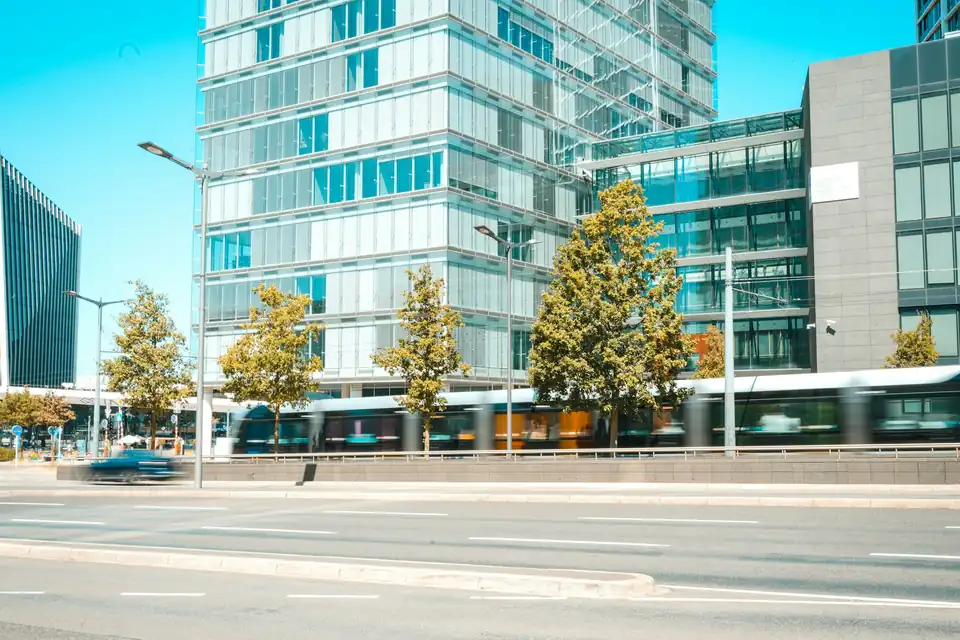
The tram line runs from the airport through Kirchberg, across to Limpertsberg, through Ville Haute, down to the Central Station, and on to Bonnevoie, Howald and Cloche d'Or. Belair sits to the west of that spine and is served by buses rather than tram.
The bus network is good and public transport is free, so this is not an isolation problem. But it does mean that a commuter to Kirchberg from Belair has a journey involving a connection, while a commuter from Limpertsberg has a direct tram. In a city where the tram is the fastest and most reliable mode, that is a real difference in daily life, and it is the strongest practical argument against the quarter for a working single professional.
If your priority is the shortest reliable commute to a plateau office, Belair is not the optimal choice, whatever its other qualities. If your priority is a family home in a quiet green quarter near the centre, it is close to unrivalled.
What the numbers say
Some context on the market as a whole before the quarter-level picture.
Start with the national backdrop. Apartments across the country averaged in the region of €8,094 per square metre in STATEC's first-quarter 2025 figures, having climbed 3.7% over the year for the second annual gain in a row. Existing stock measured by the housing observatory at the end of 2025 was close to €7,764 and going nowhere, while off-plan construction commanded a clear premium at roughly €9,507.
Luxembourg City sits well above the national average, and Belair sits at the top of the city. The Observatoire's neighbourhood-level asking-rent dataset for Luxembourg City, updated in June 2026 and covering statistics through the first quarter of 2026, consistently places Belair among the highest per-square-metre quarters in the capital, alongside Limpertsberg and Kirchberg.
Read those numbers with two things in mind. Published rents come from what landlords ask, not from what tenants sign. And sale statistics describe completed transactions, which means they arrive a quarter or two after the fact.
Is it worth it
For the household it is built for, yes. A family that will be in Luxembourg for a decade, wants a house with a garden, values quiet and green space, and does not depend on a tram commute is buying something in Belair that genuinely does not exist in equivalent quality elsewhere in the capital.
For almost everyone else, the honest answer is that a substantial part of the premium is paying for a reputation rather than a daily benefit you will actually use. A single professional working in Kirchberg gains nothing from a large garden and loses a direct tram.
Renting in Belair, if you decide to
The rental stock in Belair behaves differently from the rest of the city and it is worth knowing how before you start looking.
First, volume is low. Because so much of the quarter is owner-occupied houses held long term, the number of properties advertised in any given month is small. You are competing for a handful of listings rather than choosing among dozens, and good ones are gone within days.
Second, the stock skews large. Belair rents whole apartments and houses aimed at families and dual-income households. Single furnished rooms in shared apartments, which is the standard entry point for someone arriving alone, barely exist here. If a room is what you need, you will find far more in Limpertsberg or Bonnevoie.
Third, the age profile of the buildings cuts both ways. Belair's belle époque and interwar properties have proportions and detail that new construction does not, and some have been renovated to an extremely high standard. Others have not. In a Luxembourg winter, an unrenovated period property with original windows is a very different proposition from a photograph of one. Ask about heating type, window age and insulation before you commit to a three-year lease.
Where to look instead
Merl is the closest substitute: adjacent to Belair, similar residential character, similar green space, at a gentler price point. For families priced out of Belair this is usually the first place to look.
Limpertsberg offers elegance and a genuinely residential feel with the significant advantage of a tram stop at Place de l'Étoile. If you want the Belair character but need the commute, this is the trade to make.
Rollingergrund runs down the valley to the north-west, greener and quieter still, at a considerably lower price.
Cents and Hamm on the eastern edge deliver the quiet family character further out and cheaper again.
We manage rooms in Limpertsberg and Rollingergrund and can tell you honestly what a given budget reaches in each. Current availability is on our rentals page, and the Belair quarter page covers the local detail.