In this article
How to think about it
Three facts should shape the decision, and all three are specific to Luxembourg.
Transport is free. Since March 2020 the entire national network carries everyone without a ticket. Living further out costs you time, not money, which inverts the usual rent-versus-commute calculation.
The city is vertical. Luxembourg sits on a plateau cut by two valleys. Map distance is a poor guide to journey time. What matters is whether an address is on a fast, direct line.
Unfurnished apartments are a three-year commitment. Rooms are not. For a first year, a furnished room in a well-connected quarter is a far better bet than a long lease in a quarter you have not lived in.
The tram spine
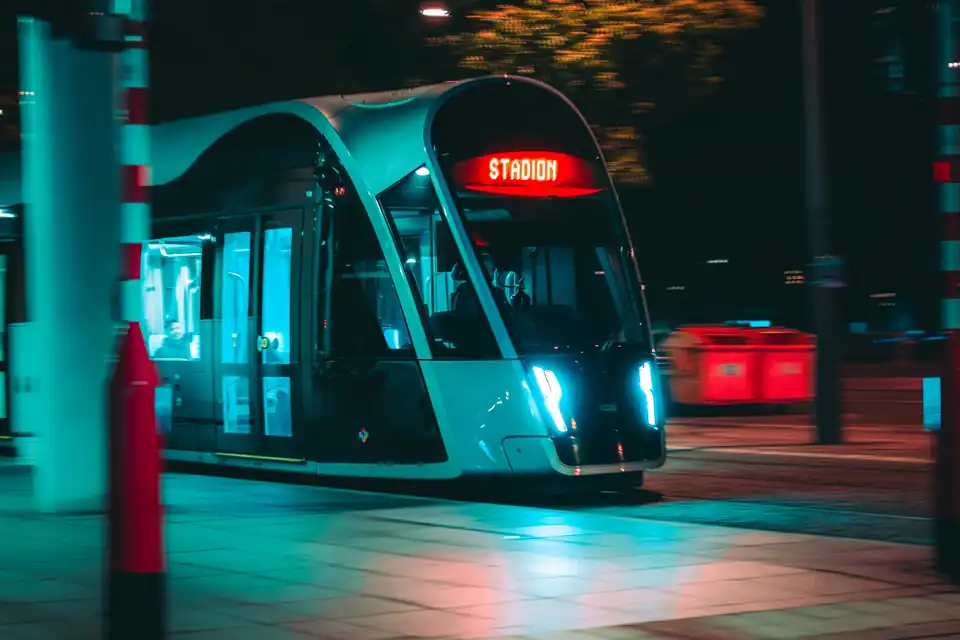
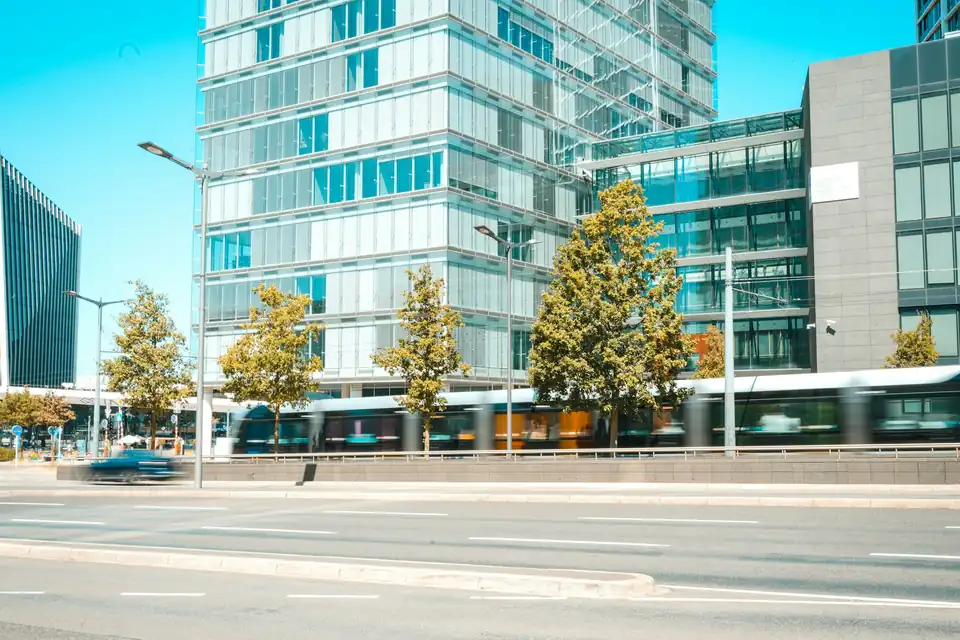
One line carries most of what matters. It runs from the airport through Kirchberg, across the Grand Duchess Charlotte Bridge to Place de l'Étoile in Limpertsberg, through Ville Haute and down Avenue de la Liberté to the Central Station, then on through Bonnevoie, Howald and Cloche d'Or in Gasperich. Twenty-four stations, sixteen kilometres.
Both of the country's largest employment districts, Kirchberg and Cloche d'Or, sit at opposite ends of that single line. If you work at either, being on the spine is worth more than almost any other quality a quarter can offer.
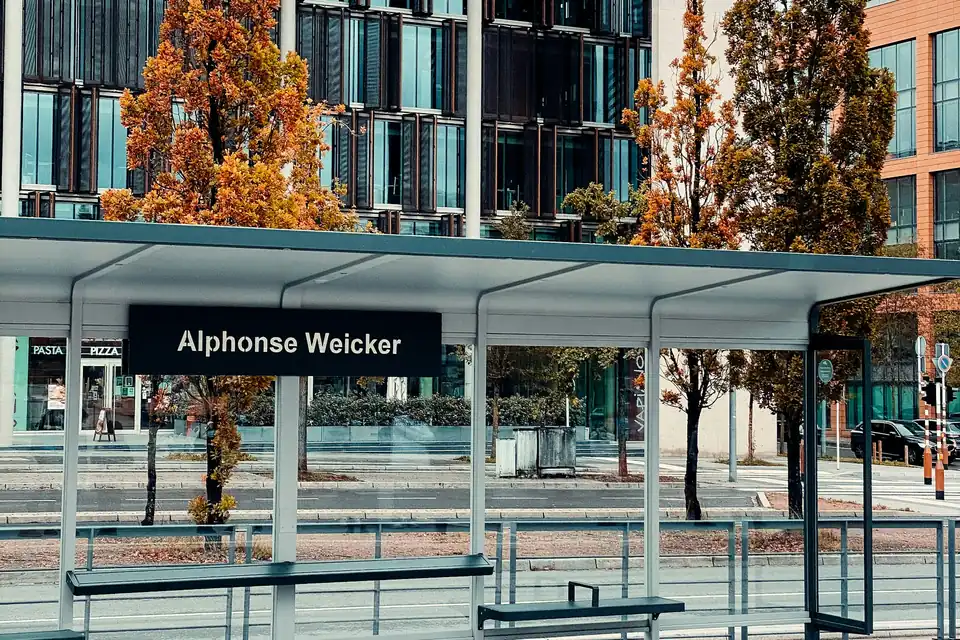
Limpertsberg
Best all-round choice for a professional who wants a neighbourhood.
Limpertsberg has a tram stop at Place de l'Étoile with a direct run to Kirchberg in one direction and Ville Haute and the station in the other. It is genuinely residential: wide leafy boulevards, the Glacis fairground, the university campus, independent cafés and restaurants, and a settled feel that the newer districts lack.
It is not cheap. The Observatoire de l'Habitat's asking-rent series places Limpertsberg among the highest per-square-metre quarters in the capital. But the shared-apartment market here is active, which means rooms are available at prices that a whole apartment in the same street would never reach.
Choose it if you want elegance and a direct commute and are prepared to pay for both.
Bonnevoie
Best value on the tram line.
Immediately south of the Central Station, on the tram since 2022 and connected onward to Howald and Cloche d'Or since July 2024. Dense, international, and among the better-value central quarters, with a complete set of everyday amenities and, unusually for Luxembourg, genuine evening life on a weekday.
The station is walkable, which matters if you travel. The housing stock is uneven, so a specific address matters more than the quarter average, and street-facing rooms carry traffic noise. Parking is difficult.
Choose it if you want the shortest path between budget, commute and having something to do. We look at it closely in our guide to living in Bonnevoie.
Gare and Hollerich
Best for people who travel constantly, and the widest price range in the city.
The Gare quarter surrounds the Central Station: the densest, most transient and most connected part of Luxembourg. National and international rail on the doorstep, the tram through it, buses in every direction. It also contains the widest spread of building quality and price in the capital, from renovated apartments to stock that has not been touched in decades.
Hollerich sits alongside it and is one of the more actively changing parts of the city, with former industrial buildings being converted and a growing cultural scene. It is worth watching for anyone thinking two or three years ahead.
Choose Gare if your job involves regular travel. View carefully, because the variance is real.
Rollingergrund
Best for quiet without moving to the edge of the city.
Running down the valley to the north-west, Rollingergrund is greener and calmer than the central quarters while remaining close in. Bus connections are good, though it is not on the tram. Prices are noticeably gentler than Limpertsberg or Belair.
Choose it if you want to come home to somewhere peaceful and are content with a bus for the daily commute.
Kirchberg, Belair, Gasperich
Kirchberg is the obvious choice for people who work there and frequently the wrong one for a single professional. Excellent for families and for anyone who values quiet and modern buildings; thin on shared accommodation and very quiet in the evening. The tram makes living elsewhere cost twelve minutes, which is not much.
Belair is the most expensive quarter in the city and the case for it is a family one: space, gardens, quiet, green. It is not on the tram, which is the single most important thing to know if you commute to a plateau office. See our piece on why Belair is the most expensive quarter.
Gasperich holds Cloche d'Or, now the southern terminus of the tram, with substantial new residential development around it. Modern and convenient for anyone working in that district, with a similar evening quietness to Kirchberg.
Three common profiles
Arriving alone, first contract, Kirchberg office
Take a furnished room on the tram line and give yourself a year before committing to anything longer. Limpertsberg gives you a direct tram and a settled neighbourhood; Bonnevoie gives you a longer ride, a livelier quarter and meaningfully more money left over each month. Both work. Kirchberg itself is the option we would rank third, not first, because the room market there is thin and the quarter is quiet after hours.
Couple, both working, one in the centre and one at Cloche d Or
The tram spine solves this, and the answer is somewhere between the two: Gare, Bonnevoie or Hollerich. All three put both workplaces on a single line without a connection, and the price range in Gare and Hollerich is wide enough to accommodate most budgets. This is the scenario where being on the spine is worth the most, because it removes a connection from two commutes rather than one.
Family relocating with school-age children
The calculation changes completely. Space, quiet, green and schooling outrank commute time, and the quarters that win are Belair, Merl, Cents, Hamm and Kirchberg. Belair and Merl for character and gardens; Cents and Hamm for the same qualities further out and cheaper; Kirchberg for modern buildings and proximity to international schooling. Accept a bus or a connection and optimise for the home instead.
Side by side
| Quarter | On the tram | Relative cost | Rooms available | Evening life |
|---|---|---|---|---|
| Limpertsberg | Yes | High | Good | Moderate |
| Bonnevoie | Yes | Moderate | Good | Strong |
| Gare | Yes | Wide range | Good | Strong |
| Kirchberg | Yes | High | Limited | Quiet |
| Gasperich | Yes | Moderate to high | Limited | Quiet |
| Rollingergrund | No | Moderate | Some | Quiet |
| Belair | No | Highest | Limited | Quiet |
Practical advice
- Time the commute, do not estimate it. Use the official route planner at mobiliteit.lu with your actual office address before shortlisting anything.
- Filter on availability date. A room free on the first of next month is a completely different proposition from one free now, and it removes most of the noise from a search.
- Have your documents ready before you view. Good rooms go in days. Passport, employment contract, recent payslips, proof of current address.
- Check the deposit before the viewing. It is capped at two months of base rent since August 2024, and the difference between one and two months is larger than any other saving you will make. See our guide to deposits and tenant rights.
- Do not sign a three-year lease in your first month. Spend a year learning the city from a well-connected room, then commit.
Every quarter has its own page on our site with transport lines and amenities, browsable from the neighbourhoods overview. Current rooms, with price, deposit and availability on each listing, are on the rentals page. If you would rather give us your office address and your budget and let us shortlist, get in touch.