In this article
What is free and what is not
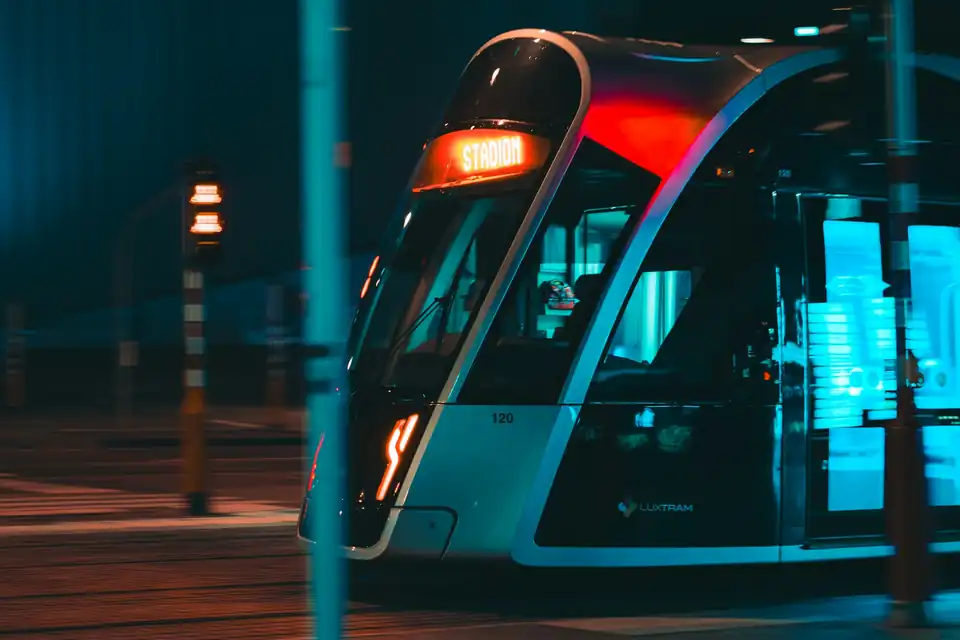
Since 1 March 2020 all public transport inside Luxembourg has been free: buses, the Luxembourg City tram and CFL trains in second class, for residents and visitors alike. There is no ticket, no card and no registration.
Three exceptions apply, and all three are relevant to a weekend away. Choosing a first-class carriage on a CFL train means paying for it. Buses that cross a border charge a RegioZone fare. And a rail journey that continues past the frontier needs a ticket covering the foreign leg, with the Luxembourg leg still costing nothing.
Three border stations escape that rule entirely. Travel in second class to or from Athus on the Belgian side, or Audun-le-Tiche and Volmerange-les-Mines on the French side, and you pay nothing at all. If you want a genuinely zero-cost day out across a border, those are the three names to remember.
One important practical detail. On a cross-border service you must hold your ticket before the last stop inside Luxembourg, because that is where inspection takes place. Buying on board afterwards is not a plan.
Inside Luxembourg
The whole country is free, which makes domestic weekends unusually easy to improvise.
The Mullerthal
Known as Little Switzerland, this is the country's best walking region: sandstone formations, gorges, forest paths and a well-marked long-distance trail. Reachable by rail to Ettelbruck or Diekirch and onward by bus, or by bus from the capital towards Echternach. The most rewarding domestic day out for anyone who walks.
Vianden
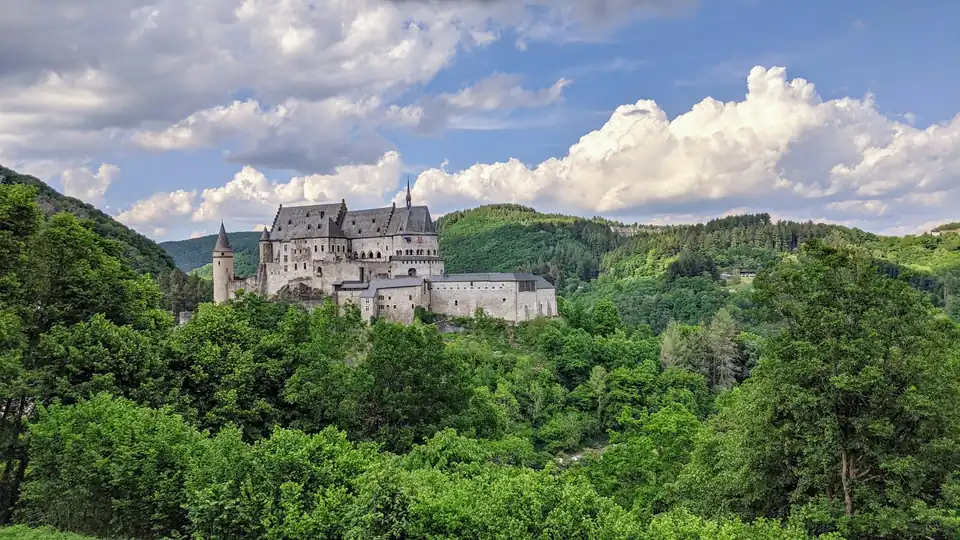
A hillside town beneath a restored medieval castle, with a chairlift up the valley side and a Victor Hugo museum in the house where he stayed. Rail to Ettelbruck, then bus. It is the postcard version of Luxembourg and it earns it.
Clervaux
Deep in the Ardennes in the north, with a castle housing The Family of Man, Edward Steichen's photographic exhibition inscribed on the UNESCO Memory of the World register. On the northern rail line, straightforward from the capital.
Esch-sur-Alzette and Belval
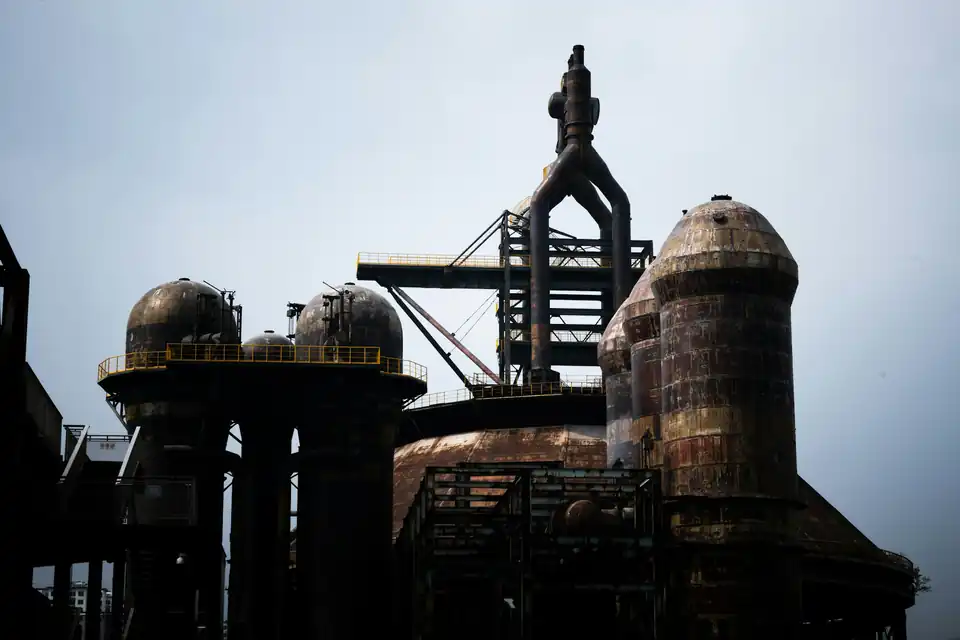
The second city and the former steelworks site beside it, now a university campus and cultural quarter built around preserved blast furnaces. Industrial heritage of a very high order, and a short direct train.
The Moselle valley
Remich, Grevenmacher and the wine villages along the river. Best reached by bus rather than rail, and best in late summer and early autumn when the vineyards are working.
Germany: Trier and the Moselle
Trier is the obvious first trip and the one most residents make within their first months. Roughly an hour by direct train, it is the oldest city in Germany, with a remarkable concentration of Roman monuments: the Porta Nigra, the imperial baths, the amphitheatre and the basilica. Add a cathedral, a substantial old town and German prices, which after Luxembourg feel like a discount.
Beyond Trier the German Moselle continues towards Bernkastel-Kues and Cochem, wine country with steep terraced vineyards and castle villages. Koblenz, where the Moselle meets the Rhine, is a longer but very feasible day.
Saarbrücken is reachable in around ninety minutes and is served by a dedicated express service, which is priced separately from the standard RegioZone fares.
France: Metz, Nancy and beyond
Metz is around an hour away and is the best-value French weekend from Luxembourg. The Centre Pompidou-Metz, the Gothic cathedral with its extraordinary stained glass including windows by Chagall, a well-preserved centre and a genuinely good food scene. The Christmas market in December is among the better ones in the region.
Nancy is further, roughly two hours with a connection, and worth the additional time for Place Stanislas, one of the finest eighteenth-century squares in Europe, and a concentration of Art Nouveau architecture and glass.
Thionville sits just across the border and is the practical stop for anyone doing a French supermarket run, which is a genuine part of local life given the price differential.
Paris is reachable in a little over two hours on the direct high-speed service, which makes it a realistic weekend rather than a trip. Book ahead: the fare difference between an advance and a walk-up ticket is substantial.
Belgium: Arlon, Liège and Brussels
Arlon is the nearest Belgian town, about half an hour away, useful for a low-effort change of country and for its Roman museum.
Liège is around two and a half hours and worth it for the Guillemins station alone, a Calatrava structure that is one of the more striking pieces of contemporary architecture in Europe, plus a large Sunday market along the Meuse.
Brussels is roughly three hours on the direct line. It is the trip to make when you need a large city, and it is the one that most reliably cures the occasional feeling that Luxembourg is small.
Bruges and Ghent are feasible as a full weekend rather than a day trip, connecting through Brussels.
Planning and practicalities
- Use mobiliteit.lu for domestic and regional planning. It covers bus, tram and rail together, which matters because most Luxembourg journeys combine at least two.
- Use the CFL app for timetables and for anything first class. Note the change that took effect at the start of 2026: the mKaart has been retired for everyday travel, and neither a bus driver nor a CFL counter will sell you a ticket any more.
- Carry identification. Even with no ticket to show, passengers must be able to produce a personal identity document on request.
- Bikes travel free on most CFL services off-peak, with some regional restrictions at peak times.
- Check engineering works. Weekend track work on the Luxembourg network is common and replacement buses are the norm rather than the exception.
- Sunday closing. Shops in Germany are closed on Sundays, so plan a Saturday if shopping is part of the trip.
What a weekend actually costs
The transport arithmetic is unusual enough to be worth spelling out, because it changes which trips are worth making.
A domestic day out costs nothing at all in transport terms. Walking the Mullerthal, visiting Vianden or spending a day in Clervaux involves no fare whatsoever, which makes them worth doing on a whim rather than planning around.
A cross-border trip costs only the portion outside Luxembourg. On a journey to Trier or Metz, the Luxembourg segment is free and you pay from the border onward, which means these are considerably cheaper than the map distance suggests. Regional cross-border tickets are modest, and the two-hour RegioZone fare on cross-border buses is priced for commuters rather than tourists.
The exceptions are the long-distance high-speed services, where the fare is set by demand rather than distance. Paris in particular rewards booking well ahead, and a walk-up ticket on a Friday evening can cost several times an advance fare purchased weeks earlier.
What works in which season
Spring. The Mullerthal and the Ardennes at their best, before the summer crowds and after the paths dry out.
Summer. The Moselle on both sides of the border, river swimming and terraces, and the long evenings that make a Friday departure worthwhile.
Autumn. Wine season along the Moselle, and the best light of the year in the Ardennes.
Winter. Christmas markets across the whole region, with Trier, Metz and Aachen all within reach, and the indoor cities: museums in Brussels, Liège and Nancy.
Why this matters when choosing where to live
If weekends away are part of how you want to live here, proximity to the Central Station is worth real money. Gare and Bonnevoie put you within walking distance of every departure in this article, and Kirchberg has the Pfaffenthal-Kirchberg station and its funicular below the plateau.
It is a small consideration next to commute and budget, but it is a real one, and the people who use it most are the ones who chose an address with it in mind. Our neighbourhood guides list the transport connections for each quarter, and current rooms are on the rentals page.