In this article
Who organises it
Household waste is the responsibility of each commune. In Luxembourg City, the City's hygiene service organises collections, publishes the calendar and runs the Recycling Centre. Other communes organise things slightly differently, so if you live outside the capital, check your commune's website.
In apartment buildings, the bins are shared and usually kept in a bin room. The building manager or caretaker often puts them out on collection days.
The door-to-door bins
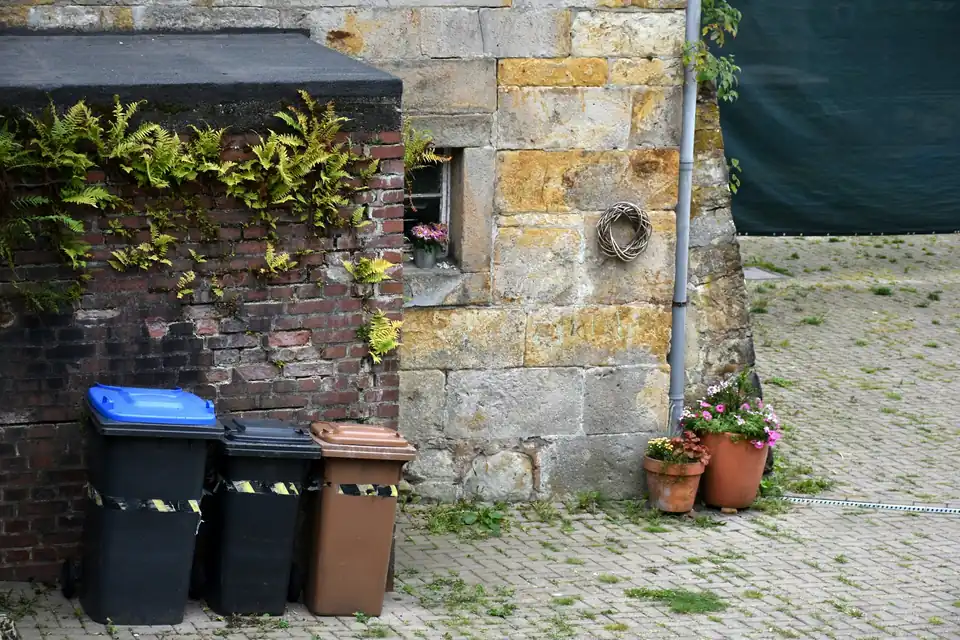
Luxembourg City collects several streams separately from homes and buildings, using bins of different colours:
- residual waste, for what cannot be sorted;
- paper and cardboard;
- glass;
- organic waste, such as food scraps and small amounts of garden waste.
Check the labels on the bins in your building, which show what goes where, and the City's collection calendar for your street. The City publishes an A-to-Z guide explaining where each type of item belongs.
Valorlux blue bags
Packaging goes in the Valorlux blue bag, known as the PMC bag, for plastic, metal and drinks cartons. According to Valorlux, it accepts:
- plastic packaging: bottles, tubs, trays, films and bags;
- metal packaging: cans, tins, empty aerosols without hazard symbols, metal trays;
- drinks cartons: milk and juice cartons.
Packaging must be empty, and items are limited to 5 litres. You do not need to wash packaging.
What does not go in the blue bag: paper and cardboard, black plastic that sorting machines cannot detect, multi-layer packaging such as crisp bags and coffee pouches, polystyrene, medicine packaging and hazardous products.
Blue bags can be ordered online for home delivery, collected at partner points such as some petrol stations, or obtained through your commune. They are collected on scheduled days along with the other waste.
Public containers
Luxembourg City also has public collection points across the quarters for glass, paper and cardboard, clothing and batteries. They are useful for larger quantities, such as moving boxes, and for items not collected at the door.
The Recycling Centre
For bulky items, electrical appliances, wood, metal, garden waste in larger volumes and other materials, Luxembourg City residents can use the City's Recycling Centre on the route d'Arlon. Check the opening hours and accepted materials on the City's website, and bring proof that you live in the city.
Bulky waste can also be collected on demand from your home, for a fee, by arrangement with the City.
SuperDrecksKëscht
SuperDrecksKëscht, which means roughly "super dirt box", is Luxembourg's national system for hazardous household waste: paints, solvents, chemicals, fluorescent tubes, cooking oil, medicines and similar products. A mobile collection visits the quarters on scheduled dates, and products can also be taken to the Recycling Centre and to participating shops. Never put these products in the ordinary bins.
Moving in and moving out
Moving generates a lot of waste in a short time.
- Flatten cardboard boxes and take them to the public paper containers or the Recycling Centre, rather than filling the building's paper bin in one day.
- Book bulky waste collection in advance if you are leaving furniture behind, or take it to the Recycling Centre.
- Ask the previous occupant or the landlord where the bins are and which day they go out.
- Leave the home empty and clean for the exit inventory. Items left behind can be deducted from your deposit. See our guide to ending a lease.
In a shared flat, agree who puts out the bins and who orders the blue bags. It is a small thing that causes a surprising number of arguments. Our guide to colocation rules suggests writing it into the colocation pact.
Why it matters
Luxembourg takes sorting seriously for practical and environmental reasons, and waste collection is funded partly through fees linked to residual waste. In apartment buildings, poorly sorted bins can lead to complaints from the building manager and, in some cases, extra costs passed on through the charges. Sorting properly is a way of being a good neighbour.
Questions we are often asked
What if the bins in my building are full?
Keep sorted waste until the next collection, or take paper, glass and clothing to a public container. If bins are regularly too small, tell the building manager; the number of bins can often be adjusted.
Where do old batteries and light bulbs go?
Batteries can be dropped at public collection points and many shops. Energy-saving bulbs and fluorescent tubes belong with SuperDrecksKëscht or the Recycling Centre, not in the ordinary bins.
What about old furniture when I leave?
Book a bulky waste collection or take it to the Recycling Centre. Do not leave it in the street or in the bin room.
What about garden waste?
Small amounts of grass clippings can go in the organic bin within the limits set by the City. Larger volumes of garden waste, such as branches, go to the Recycling Centre or are collected on demand.
Do I need to buy special bags for residual waste?
The bins in your building are provided through the commune's system. Ask your building manager how residual waste is organised in your building, particularly if bins are shared by many households.
Our take
The system looks complicated for the first week and becomes routine by the second. Learn the four bins, order your blue bags, save the collection calendar and remember SuperDrecksKëscht for anything hazardous.
When you move into one of our homes, we show you the bin room and the collection days on the first day. See what is available now, or read our guide to setting up utilities and internet.
Sources
This article gives general practical information. Services, prices and rules change; check the current details with the operator or the commune concerned.