In this article
Nei Hollerich
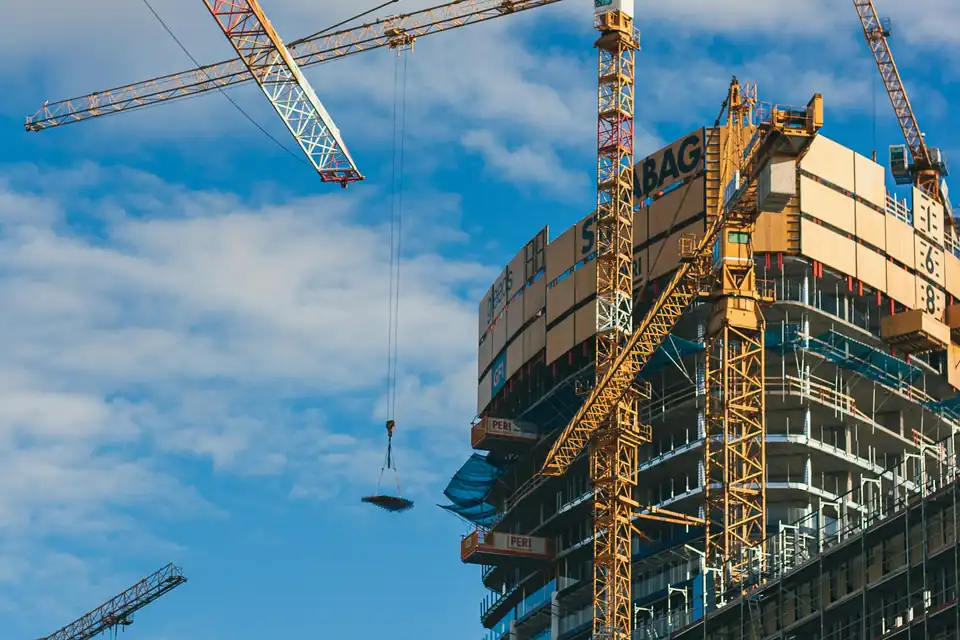
The most advanced of the major projects is Nei Hollerich, on former railway and industrial land behind Hollerich station. According to the City of Luxembourg, the plan is for an entirely new neighbourhood designed to eventually house around 4,500 residents and provide roughly 5,000 jobs, combining housing with retail at street level, offices, restaurants and services, plus a new municipal park (the Heintz van Landewyck park) and other open space. Parts of the district are already under construction and visible from the station area; other blocks remain in earlier planning stages, so completion will happen in phases over several years rather than all at once.
For buyers and tenants, Nei Hollerich in effect extends Hollerich's transformation from a light-industrial quarter into a mixed residential district well served by the train station and tram, though as with any large phased project, early residents will live alongside ongoing construction for some time. The location is a genuine advantage: Hollerich station sits on both the national rail network and a tram stop, giving quick access to the Gare quarter, Ville Haute and Kirchberg without needing a car, which is unusual for a brand-new residential district in the city.
Porte de Hollerich
Adjacent to Nei Hollerich, Porte de Hollerich is a separate, larger eco-district project covering roughly 35 hectares of land freed up as the former gasworks and bus depot operations closed. The City of Luxembourg's masterplan, presented in 2022, aims for what planners describe as an exemplary, sustainable urban development combining high ecological standards with new housing in a central location. The project spans several landowners, including the City and the State, which has made coordination and phasing a significant part of the planning work. As of 2026 it remains largely in the design and preparation stage rather than under construction, so it is a project to watch for the medium term rather than something to expect to move into imminently. Its scale, at roughly a third of a square kilometre, means it will eventually rank among the larger single urban development sites the city has handled, alongside Kirchberg's original build-out and the Cloche d'Or district in Gasperich.
Wunnquartier Stade
On the western side of the city, in Belair along the Route d'Arlon, the Wunnquartier Stade project concerns the site of the former Josy Barthel municipal stadium and its surroundings. The City ran an urban planning competition for the site, and a design has been selected as the basis for the future residential quarter, but as of the most recent information published by the City of Luxembourg, no firm construction timeline or unit count has been confirmed. This is a project best tracked through the City's own urban development pages rather than assumed to be imminent; it will be one of the few opportunities for substantial new housing directly inside Belair, historically a fully built-up and expensive quarter, as covered in our guide to why Belair is the city's most expensive quarter.
The former Villeroy & Boch site
In Rollingergrund, the historic Villeroy & Boch ceramics factory site, roughly 46,000 square metres of buildable land, is being redeveloped under the name Faïencerie by a consortium of developers who acquired the property in 2019. The plan preserves the historic "Le Carré" building as an anchor for shops, restaurants and conference space, alongside new housing and offices, with the project unfolding in phases and close to the centuries-old Château de Septfontaines, whose origins trace back to the Middle Ages. This is one of the more unusual redevelopments in the city because it reuses a genuinely historic industrial building rather than clearing the site entirely, which should give the new quarter a distinct identity compared with the more purpose-built Nei Hollerich and Porte de Hollerich districts. Rollingergrund itself has historically been a quieter, more residential quarter with limited retail of its own, so a mixed-use anchor of this kind would be a meaningful change to daily life there, not just an addition of extra flats.
Kirchberg's continuing build-out
Kirchberg is not a single new project but a plateau that has been developing in stages since the 1960s, and pockets of it are still being finished. The City has continued smaller-scale works on the plateau, including new public spaces such as the PAP Kiem development with rest and play areas, alongside the long-running residential neighbourhoods around Laangfur and the Coque area. Unlike Nei Hollerich or Porte de Hollerich, most of Kirchberg's housing stock is already built and occupied; what is left tends to be infill rather than a wholesale new district, which our dedicated guide to living on Kirchberg covers in more depth.
What this means if you are buying or renting now
A few practical points follow from these projects:
- New-build supply is coming, but on a longer timeline than advertising sometimes implies. Porte de Hollerich and Wunnquartier Stade are still in planning; only Nei Hollerich has visible construction as of 2026.
- Buying off-plan (VEFA) in these districts carries the usual off-plan considerations, including payment schedules and completion guarantees, covered in our guide to buying off-plan in Luxembourg.
- Prices in adjacent, already-established quarters can be affected once a large new supply of flats arrives nearby, so it is worth asking any agent how a listed price compares with recently completed units in the same development.
- Construction noise and access disruption are real for several years around any active site; if you are sensitive to this, ask specifically about the phase and expected completion of the block you are considering, not just the wider project.
Our take
These projects will materially change the housing map of Luxembourg City over the coming decade, but at different speeds. Nei Hollerich is the one buyers and tenants can realistically consider today; Porte de Hollerich, Wunnquartier Stade and further Kirchberg infill are worth tracking rather than acting on immediately, since dates and unit numbers are still moving. If you are curious whether a specific new development suits your budget and timeline, contact us or browse our current listings, which we update as new phases come to market.