In this article
Vianden: the postcard castle
Vianden, in the north near the German border, is the trip most visitors picture when they think of Luxembourg: a restored medieval castle above a hillside town on the Our river, with a chairlift running up the opposite valley side for a view back over the whole scene. The house where Victor Hugo lived in exile is now a small museum. It is reached by train to Ettelbruck and then a connecting bus, all within the free network, and it makes an easy half-day, or a full day if you add a walk along the river or into the surrounding hills.
The Mullerthal: Luxembourg's best walking country
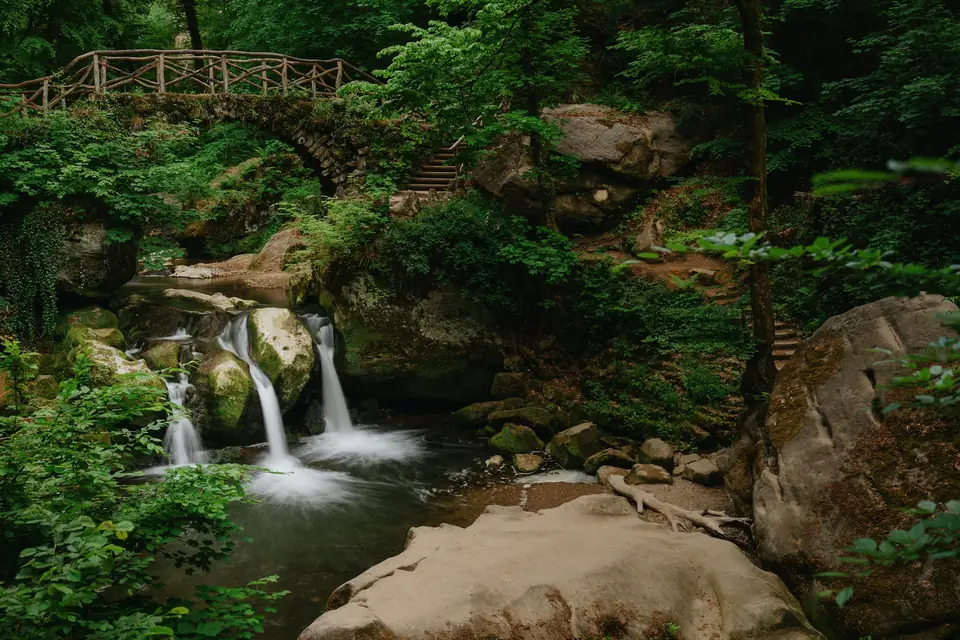
Known as "Little Switzerland" despite being nowhere near the Alps, the Mullerthal region in the east is a landscape of sandstone rock formations, narrow gorges and forest paths, tied together by the long-distance Mullerthal Trail. It is reachable by train to Ettelbruck or Diekirch and onward by bus, or directly by bus from the capital towards Echternach, and it rewards good shoes and a full day more than a quick look. Echternach itself, at the edge of the region, has a well-preserved old town and the Willibrord Basilica, worth combining with a shorter walk if a full trail is more than you want.
The Upper Sûre lake
Less visited than Vianden but worth the detour, the Lac de la Haute-Sûre (Upper Sûre lake) is a large reservoir in the west of the country, inside the Upper Sûre Natural Park, offering swimming, canoeing, sailing and windsurfing, with motorised boats banned, which keeps it quiet. A solar-powered boat runs tours on the water in season. The village of Esch-sur-Sûre, just east of the lake, sits in a dramatic loop of the river below the ruins of its own castle and makes a good base for the day. Use the mobiliteit.lu journey planner to check the current bus connection from the capital, since the route involves a regional bus rather than a direct rail line.
Bourscheid Castle
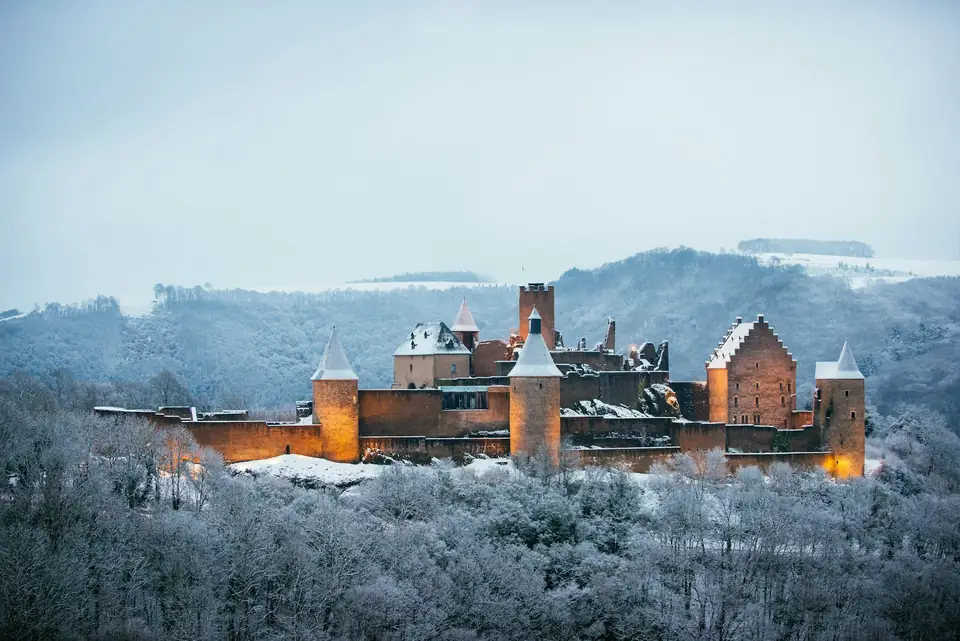
Bourscheid, Luxembourg's largest castle, sits on a hilltop above the Sûre valley in the north, with a fortress wall punctuated by eleven towers, origins going back to around the year 1000 and later medieval expansion. At the time of writing it opens daily, with an audio guide available in several languages, though hours can vary by season, so check the official Bourscheid Castle site before travelling. It combines well with a walk in the surrounding Sûre valley and pairs naturally with a stop in nearby Diekirch, home to a well-regarded museum on the Battle of the Bulge.
Moselle villages: Remich and Schengen
The Moselle valley in the south-east is wine country, and the riverside town of Remich is the easiest introduction, with a promenade along the river, wine cellars open for tastings and a relaxed pace that suits a slow afternoon rather than a packed itinerary. A short distance further south is Schengen, the village that gave its name to the European Union's passport-free travel area. The free European Museum Schengen explains the 1985 agreement signed on a boat moored at the village, and there is a preserved fragment of the Berlin Wall nearby as a companion piece to that story. Getting to Schengen by bus from the capital typically means a route via Mondorf-les-Bains with a connection onward, taking a little under an hour in total; check current timings on mobiliteit.lu, since bus frequencies on this route are hourly rather than continuous.
Esch-sur-Alzette and Belval
For an entirely different kind of day, Esch-sur-Alzette, Luxembourg's second city, and the adjoining Belval site combine a lively town centre with a striking piece of industrial heritage: former blast furnaces preserved on what is now a university campus and cultural quarter. It is a short, direct train ride from the capital and a good option when the weather does not favour a walk in the Mullerthal or the Ardennes.
Clervaux
Further north again, Clervaux sits deep in the Ardennes and is home to a castle housing The Family of Man, Edward Steichen's photographic exhibition inscribed on UNESCO's Memory of the World register, alongside a working Benedictine abbey on the hillside above the town. It is on the northern rail line and is a straightforward, entirely free journey from the capital.
Combining destinations
A few of these places sit close enough together to combine into a single, fuller day if you are willing to move around a little more. Bourscheid and the Mullerthal are both accessible from a base in or near Diekirch or Ettelbruck, making it possible to see a castle and walk part of a gorge trail in the same trip if you start early. Remich and Schengen sit on the same stretch of the Moselle and are naturally paired, since the bus route between them is short and frequent enough on weekdays to allow both a riverside lunch and a visit to the museum. Esch-sur-Alzette and Belval are close enough to each other to explore on foot in a single afternoon, which suits a shorter day or a trip taken after a late start.
Planning a day trip
A few practical points make these trips easier:
- Use mobiliteit.lu to plan the combined bus, tram and rail journey, since most destinations outside the capital involve at least one connection.
- Carry identification. Even though there is no ticket to buy on the domestic network, passengers must be able to produce identification if asked.
- Check engineering works, particularly at weekends, since replacement bus services on parts of the rail network are common rather than exceptional.
- Bikes travel free on most CFL trains off-peak, which is worth knowing if you want to combine a train journey with cycling once you arrive, for example around the Moselle or the Upper Sûre lake.
Our take
The genuine appeal of living in Luxembourg is how little planning a good day out requires: no ticket to buy, no parking to find, and a country small enough that a castle, a lake or a wine village is rarely more than an hour or two away. If easy weekend access to places like these is part of what you want from where you live, quarters near the Central Station such as Gare and Bonnevoie put you within walking distance of every departure in this guide. Browse our current listings or contact us if you would like help finding a home with that in mind.
Sources
This article gives general practical information. Services, prices and rules change; check the current details with the operator or the commune concerned.