In this article
The foundation: free public transport
Since 29 February 2020, public transport in Luxembourg has been free for everyone on trains in second class, trams and buses throughout the country, residents and visitors alike. There is no ticket, no card and no registration. Our guide to free public transport explains what is covered and the few exceptions, such as first class.
For someone without a car, it removes the main cost of getting around and makes every journey spontaneous: you just get on.
The tram: the city's spine
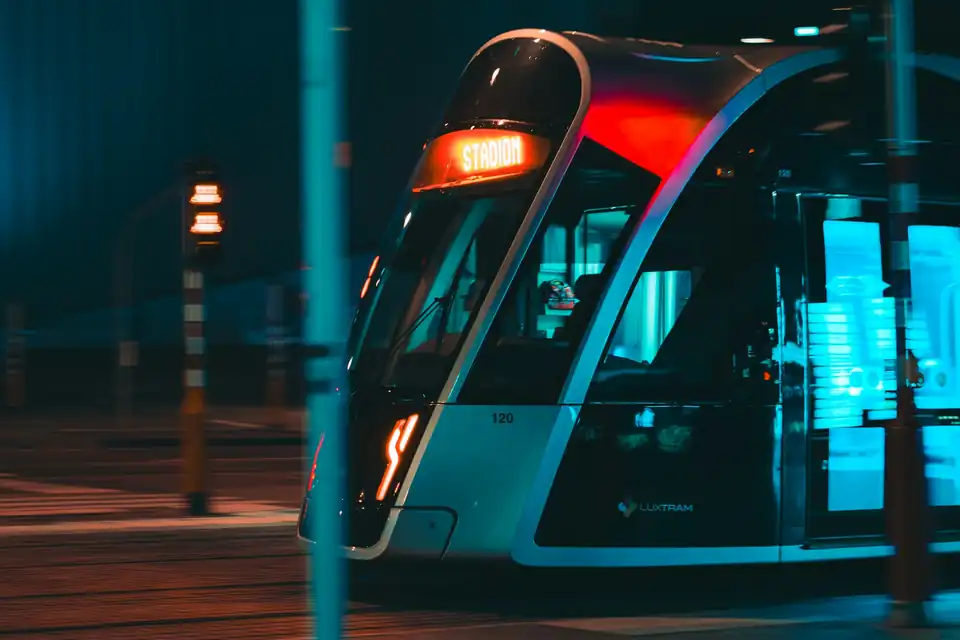
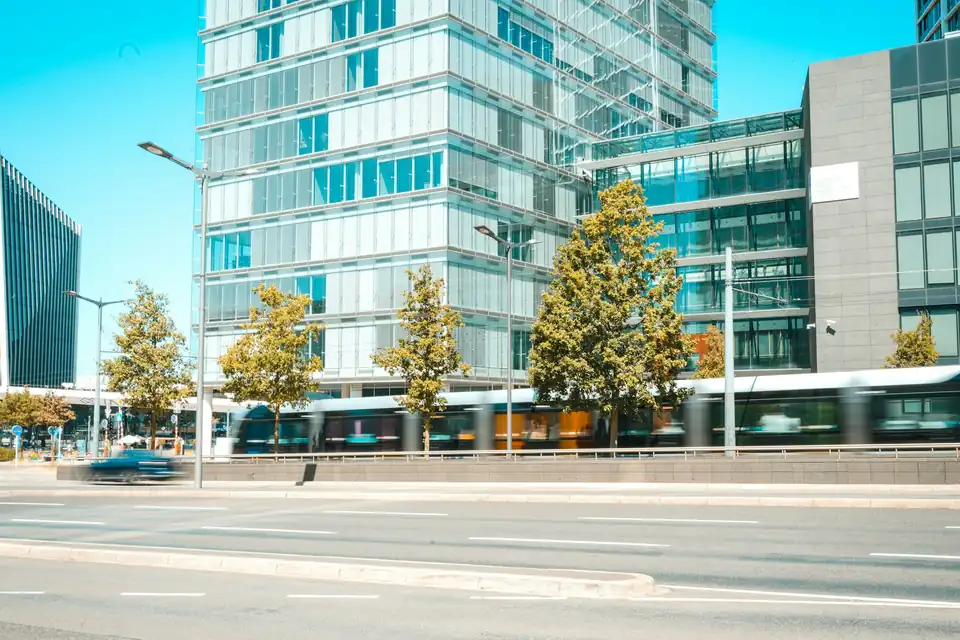
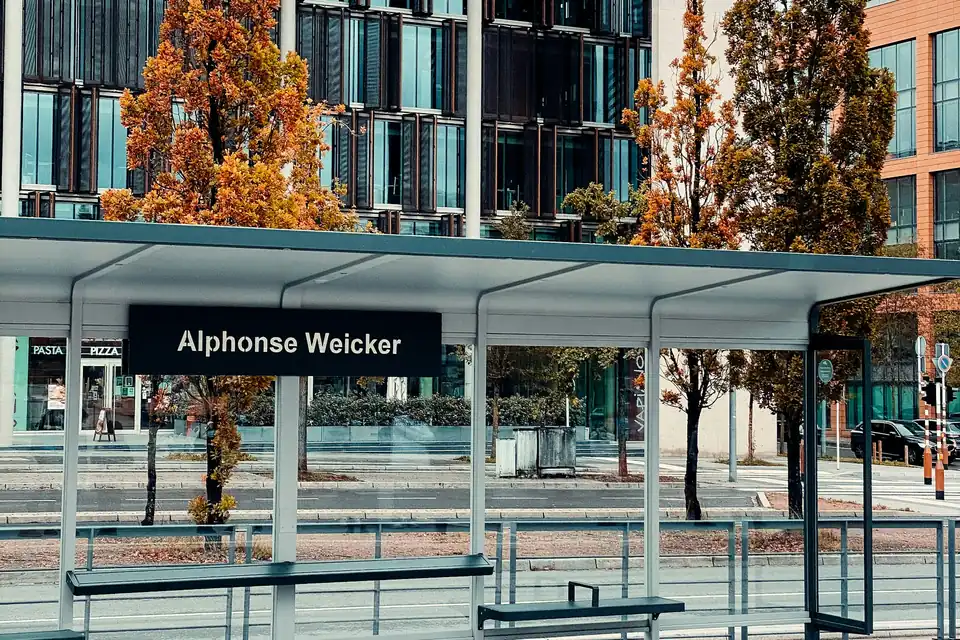
The T1 tram line crosses Luxembourg City from Luxembourg Airport in the north-east, through Kirchberg, over the Grand Duchess Charlotte Bridge, past Limpertsberg and the old town, across the Adolphe Bridge, to the central station, then through Bonnevoie and Howald to Cloche d'Or and the Stade de Luxembourg. The airport section opened in 2025 and the southern section in 2024.
Living within a few minutes' walk of a tram stop is the single best thing you can do for a car-free life in the city. It connects the main employment areas, the station, the old town and the airport without a change. Further extensions of the network are planned.
Buses: the rest of the map
The AVL city buses and the national RGTR buses cover the quarters the tram does not. The city network was reorganised in 2026, so check current lines and timetables in the official apps rather than relying on older guides. Night services cover late journeys on certain routes.
Quarters away from the tram, such as Merl, Cessange, Hamm or the northern valley quarters, work well without a car if a direct bus line connects them to your workplace. Check that before choosing.
Lifts and the funicular
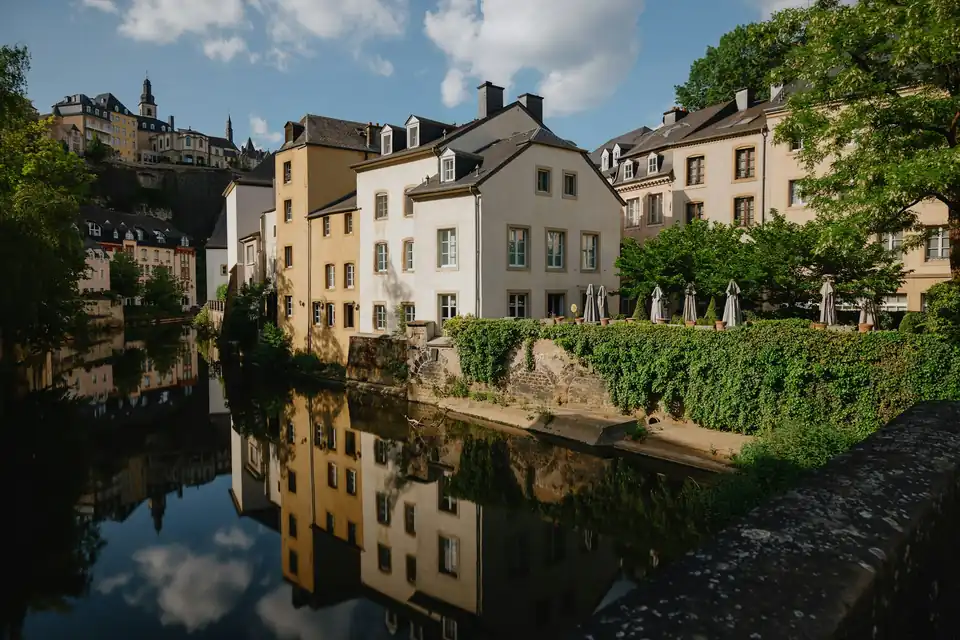
Luxembourg City is built on plateaux and valleys. Public lifts connect the old town to the Grund and to Pfaffenthal, and a funicular links Pfaffenthal to the Kirchberg tram line and railway station. They turn steep climbs into short rides. Our guide to the valley quarters explains how residents use them.
vel'OH!: electric bike-share
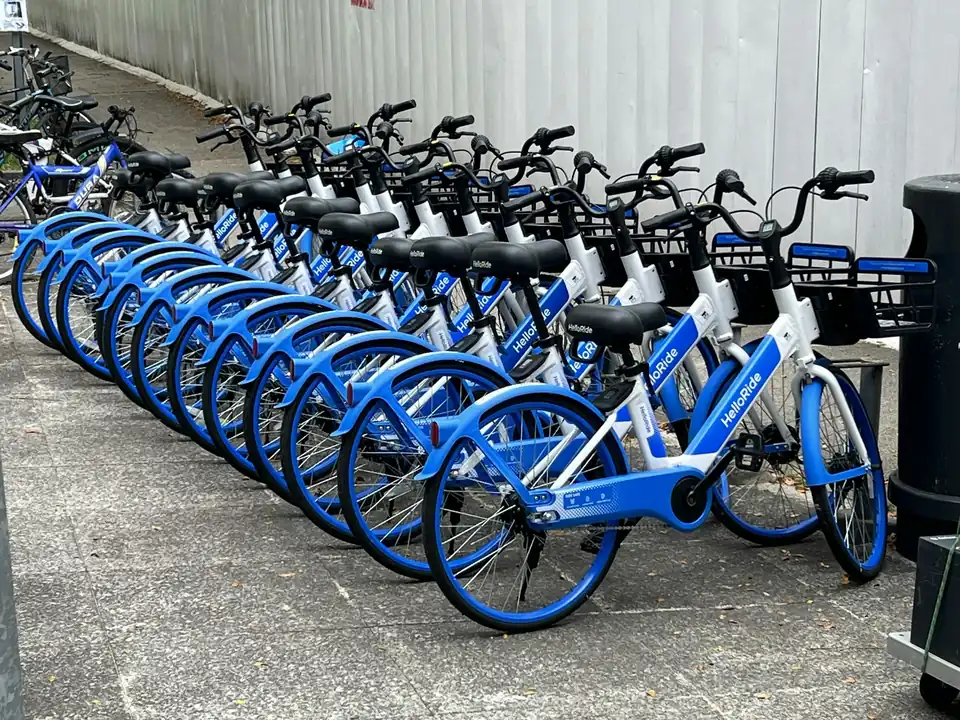
The city's bike-share system, vel'OH!, operates more than 100 stations in Luxembourg City and surrounding communes, and its bikes are all electric, with pedal assistance up to 25 km/h. On a city of hills, that changes everything: the climb from the Grund or from Clausen becomes easy.
According to the City, options include annual subscriptions and short-term passes, such as a day for €2 or three days for €5, as well as business plans. The mobile app shows stations and available bikes.
Cycling with your own bike
Cycling infrastructure in Luxembourg City has improved, with more lanes and routes, although some main roads remain busy. The plateaux are pleasant to cycle; the climbs between them are serious without electric assistance. Before renting a flat, ask where bicycles can be stored; many older buildings have limited space.
Car-sharing for the occasional trip
For the trips that do need a car, such as a large shopping run, a day in the Ardennes, or a visit to IKEA, car-sharing services are available in Luxembourg City, including a service operated by the national railway company. Combined with rental cars for holidays, many residents find this far cheaper than owning a car and paying for parking.
Which quarters make it easy
- Easiest: the Gare quarter, the old town, Bonnevoie, Limpertsberg, Kirchberg and Cloche d'Or, all on or next to the tram.
- Easy with a good bus line: Belair, Merl, Hollerich, Rollingergrund, Pfaffenthal and the Grund.
- Harder: the quieter residential quarters on the edges of the city, where buses are less frequent and shops further away.
Our guide to the best quarters for working professionals compares commutes in more detail.
Where it gets harder
- Families with young children often find a car useful for crèche and school runs, especially if the two are in different directions. See our guide to childcare.
- Large weekly shopping is easier with delivery or car-sharing.
- Weekends in the countryside are possible by train and bus to many destinations, as our guide to weekend trips by train shows, but some places really need a car.
Questions we are often asked
Is first class free too?
No. Free public transport covers second class on trains. First class still requires a ticket.
Can I take a bike on the tram or train?
Bicycles are accepted on trains and trams under conditions and within capacity limits, which can be restricted at busy times. Check the current rules before relying on it for a daily commute.
Is the tram frequent enough to live without a timetable?
On the central section it runs frequently through the day, and most people simply go to the stop. Early in the morning, late in the evening and at weekends, it is worth checking the app.
What about getting to the airport?
The tram now reaches Luxembourg Airport directly, and buses also serve it. For an early flight, check the first departures the evening before.
Our take
For a newcomer to Luxembourg City, starting without a car is usually the right decision: free public transport, the tram and electric bikes cover most of daily life, and you avoid the cost and the parking problem while you learn the city. If, after a few months, you find a car would really change your life, you will know exactly which quarter and which kind of home to look for. Our guide to driving in Luxembourg covers what to do when that day comes.
Most of our homes are within a short walk of the tram or a direct bus line, and every listing says so. See what is available now.
Sources
This article gives general practical information. Services, prices and rules change; check the current details with the operator or the commune concerned.