In this article
Three quarters, one valley
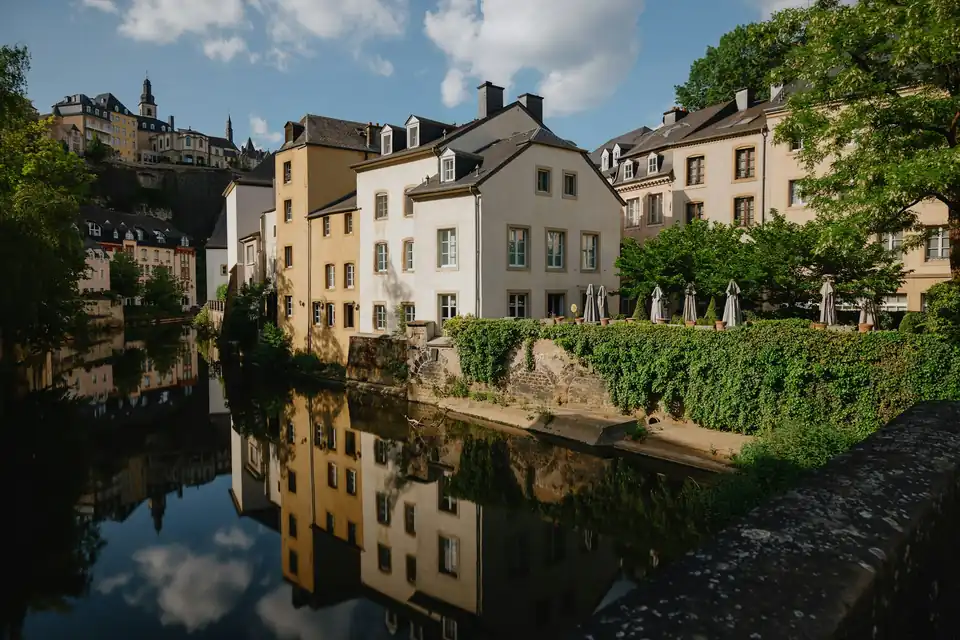
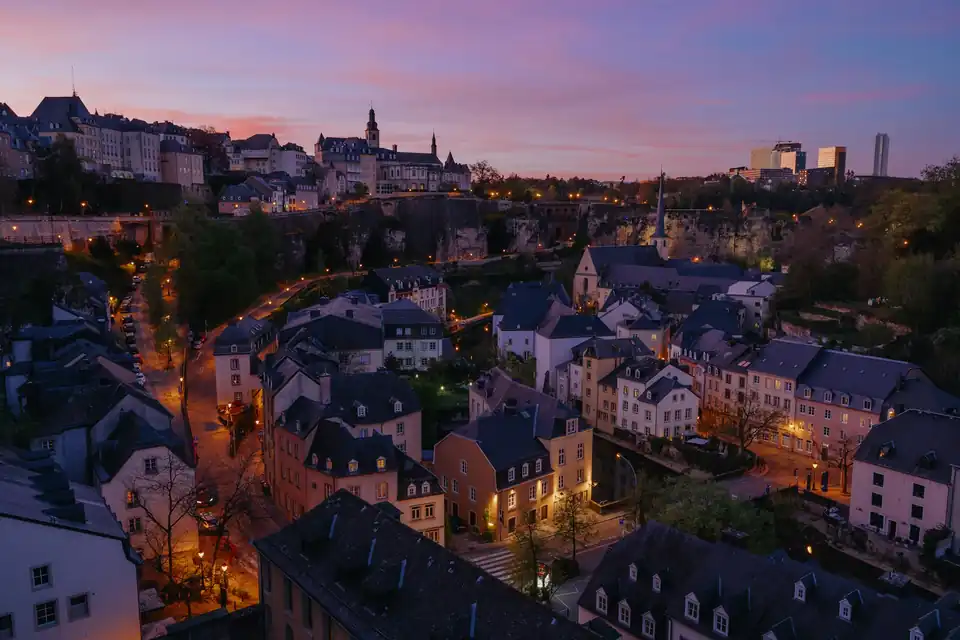
The Alzette winds around the rock on which the old town stands. On its banks, over centuries, grew districts of craftsmen, mills and breweries.
- The Grund lies to the south of the old town, around the Neumünster Abbey and the river's bend. It is the most visited of the three.
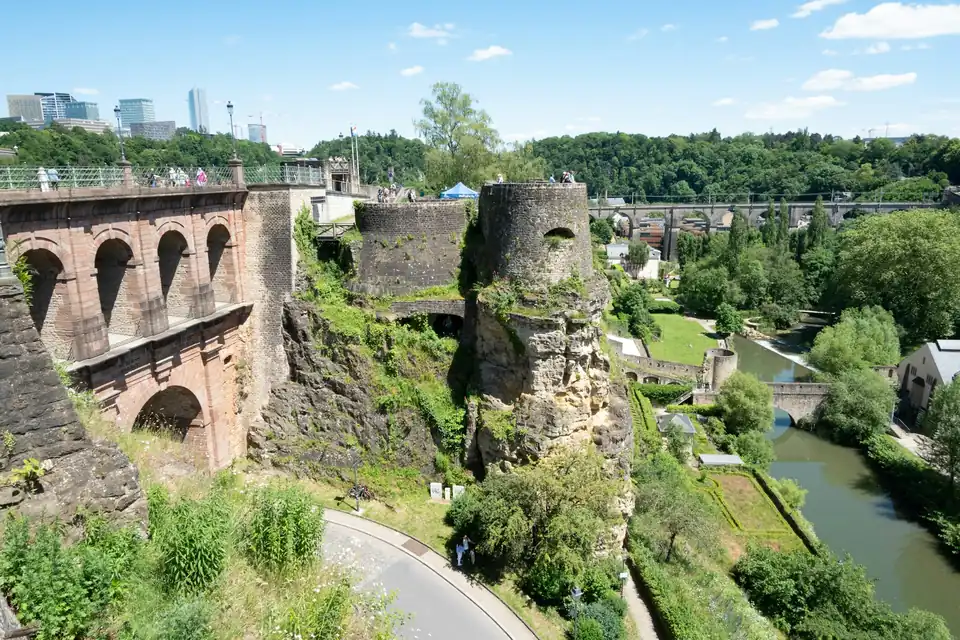
- Clausen lies to the east, below the Bock promontory and the casemates. Its old brewery buildings now house the Rives de Clausen, one of the city's main evening destinations.
- Pfaffenthal lies to the north, between the old town and the Kirchberg plateau, under the great red bridge.
Our individual pages for the Grund, Clausen and Pfaffenthal describe each one. This guide looks at what they share, and how to choose between them.
Getting up and down
The first question anyone living in the valley asks is: how do I get to the plateau? The answer is better than it looks.
- A public lift connects the Grund to the old town, turning a steep climb into a short ride.
- In Pfaffenthal, a panoramic lift rises to the old town, and a funicular links the valley to the Kirchberg tram line and the Pfaffenthal-Kirchberg railway station. It is the best-connected of the valley quarters.
- Clausen relies on buses and on steep streets and stairs up to the old town and Kirchberg.
Buses serve all three quarters, and all public transport is free. For someone who works in the centre or at Kirchberg and does not need a car, the valley is far more practical than its position suggests. For someone who drives, it is less so.
Light and seasons
The valley is lower, greener and more sheltered than the plateau. That makes it cooler in summer and softer in atmosphere. It also means less direct sun in winter, particularly in houses close to the cliffs, and more humidity near the river. When viewing, look at the orientation of the main rooms and check for damp in cellars and ground floors.
Noise and visitors
The valley quarters are among the most visited places in the country.
- The Grund has visitors during the day and a mix of restaurants and bars in the evening.
- Clausen, with the Rives de Clausen, is lively late on weekend nights, especially close to the bars.
- Pfaffenthal is the quietest of the three, though the bridge and the railway above are present.
As with any lively area, the exact street matters. A house a few hundred metres from the bars can be very quiet. View in the evening before committing.
The housing
Housing in the valley is scarce, historic and small. Most buildings are old, many facades are protected, and floor plans are often irregular: low ceilings in one room, thick walls, stairs everywhere. Converted industrial buildings, particularly in Clausen, add some loft-style homes.
Three consequences for anyone searching:
- Availability is low. Homes rarely come to the market and do not stay on it.
- Space costs more. You pay for the setting, not for the square metres.
- Renovation is complex. Protected facades and old structures make works slower and more expensive, which matters to buyers.
For buyers, check the building's energy certificate and the co-ownership documents with particular care. Our guides to the energy passport and buying in a co-ownership explain what to look for.
Parking
Parking is the valley's weak point. Streets are narrow, spaces are few, and many buildings have no garages. If you depend on a car, look for a home with a space or rent one nearby before you sign. Residents can apply to the City for a residential parking permit, but it does not create spaces.
How to choose between them
- Choose the Grund if you want the classic valley setting, the lift to the old town, and do not mind visitors.
- Choose Clausen if you want evening life on your doorstep and are drawn to converted industrial buildings.
- Choose Pfaffenthal if you work at Kirchberg or travel by train, and want the quietest and best-connected of the three.
Who the valley suits
- People who work in the centre or at Kirchberg and walk or use public transport.
- Residents who value character and setting over space and modern layouts.
- Couples and single professionals rather than large families.
It suits less well anyone who needs a car daily, wants a large modern apartment, or dislikes stairs.
Questions we are often asked
Do the lifts run all night?
The public lifts have operating hours, and they are not identical everywhere. Check the current times with the City before relying on a lift for a late journey home.
Is it worth buying in the valley?
Homes here hold a unique position: supply cannot grow, because the setting is protected. That scarcity supports demand. The other side is that renovation is slower and costlier, and some homes will never have a lift or parking. Buy for the setting and the location, and budget for the building.
Are the valley quarters good for families?
For small families who value the setting and walk everywhere, they can be. For families who need space, gardens and a car, the plateau quarters or the quieter residential edges of the city are usually easier.
Our take
The valley quarters are some of the most remarkable places to live in Europe: a UNESCO-listed setting, a river at the door and the city centre a lift ride away. They reward people who choose them knowingly, for what they are, and disappoint people who expect them to be a quiet suburb with a view.
If a valley home comes up, it moves quickly. Tell us on WhatsApp if you would like to be told first, or browse our current listings.