In this article
The legal public holidays
According to the Inspection du travail et des mines (ITM), the body that administers labour rules, Luxembourg has eleven legal public holidays a year:
| Date | Holiday |
|---|---|
| 1 January | New Year's Day |
| Movable (March/April) | Easter Monday |
| 1 May | Labour Day |
| 9 May | Europe Day (added in 2019) |
| Movable (May) | Ascension Day |
| Movable (May/June) | Whit Monday |
| 23 June | National Day |
| 15 August | Assumption Day |
| 1 November | All Saints' Day |
| 25 December | Christmas Day |
| 26 December | Saint Stephen's Day |
Europe Day on 9 May is the most recent addition, which is why older lists found online sometimes show only ten. Good Friday is not a legal public holiday, so check your own employer's calendar rather than assuming a day off.
What happens when a holiday falls on a weekend
Unlike some neighbouring countries, Luxembourg gives private-sector employees a genuine benefit here. When a legal public holiday falls on a Saturday or Sunday, the employee is entitled to a compensatory day of leave, to be taken individually within three months of the holiday. If operational needs prevent that, the employer can defer it, and for holidays in November and December the deadline for taking the compensatory day extends into March of the following year. Employees who do work on a public holiday, for example in retail or hospitality, are entitled to their normal pay plus a 100% supplement, in effect double pay for that day. In 2026, several of the year's holidays land on a Saturday or Sunday, which means many employees are owed a compensatory day even though the holiday itself was not a day off.
This compensation rule does not extend to how shops and transport operate, which follow their own separate schedules; see our guide to shop opening hours for what actually stays open.
Shops, banks and transport on a public holiday
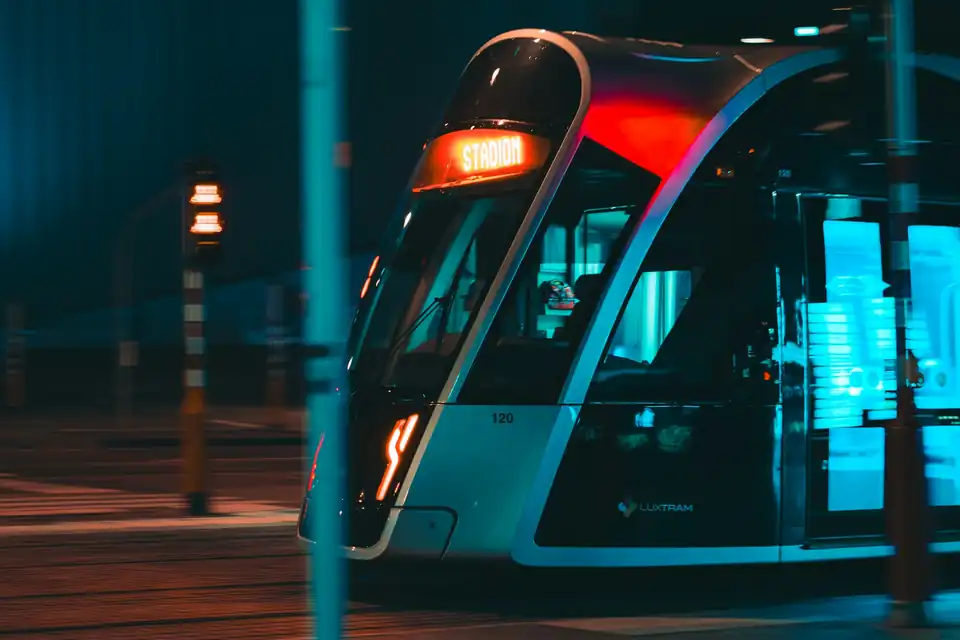
On a legal public holiday, most shops and services close, similarly to a Sunday, though supermarkets and shops in stations and at the airport can generally still open under the exemptions that apply on Sundays. Public transport in Luxembourg runs on a reduced, Sunday-style timetable on public holidays, so check timings in advance if you are relying on a specific bus or train connection, even though public transport itself is free across the country. Pharmacies maintain their duty rota as on any other day, so there is always one open nearby.
National Day: 23 June and its eve
National Day on 23 June is Luxembourg's most visible public holiday and, unusually, the celebrations are concentrated the evening before rather than on the day itself. The date does not mark the Grand Duke's actual birthday; it was fixed by tradition and law as the day the country marks the sovereign's official birthday and the nation's unity, following the official website of the Grand Ducal Court.
The evening of 22 June, known locally as the eve of National Day, is when most of the public celebration happens: a torchlight procession, a concert and fireworks over the city, typically centred on the Pétrusse valley and the old town, followed by an official Te Deum service at the Cathedral and a military parade on 23 June itself. In Luxembourg City, expect road closures, crowded terraces around Ville Haute and the Grund, and a genuinely festive atmosphere that is worth experiencing at least once if you live here.
Traditions through the year
Beyond the fixed public holidays, several recurring traditions mark the calendar and are worth knowing even though most are not days off work.
Buergbrennen takes place on the first Sunday after Carnival, when communities across the country light large bonfires at dusk to symbolise the end of winter, an old tradition still actively organised by local associations, often with food and drink on site. It is one of the more approachable ways to meet neighbours in a smaller commune.
Éimaischen (Emaischen) is held on Easter Monday, traditionally in Luxembourg City and in Nospelt, and centres on the Péckvillercher, small painted terracotta bird whistles sold at stalls alongside other crafts; it is a family event rather than a religious one for most attendees today.
The Octave is Luxembourg's main Catholic pilgrimage, a two-week period of religious services centred on Notre-Dame Cathedral in the city, honouring the Virgin Mary as the country's patroness, alongside which a traditional market called the Mäertchen runs on Place Guillaume II, more of a craft and food market than the pilgrimage itself.
The Schueberfouer is the largest funfair in the Greater Region, held for around three weeks in late August and September on the Glacis in Limpertsberg, with rides and food stalls; it dates back to a market charter granted in the 14th century and marks the unofficial end of summer for many residents.
Christmas and year-end
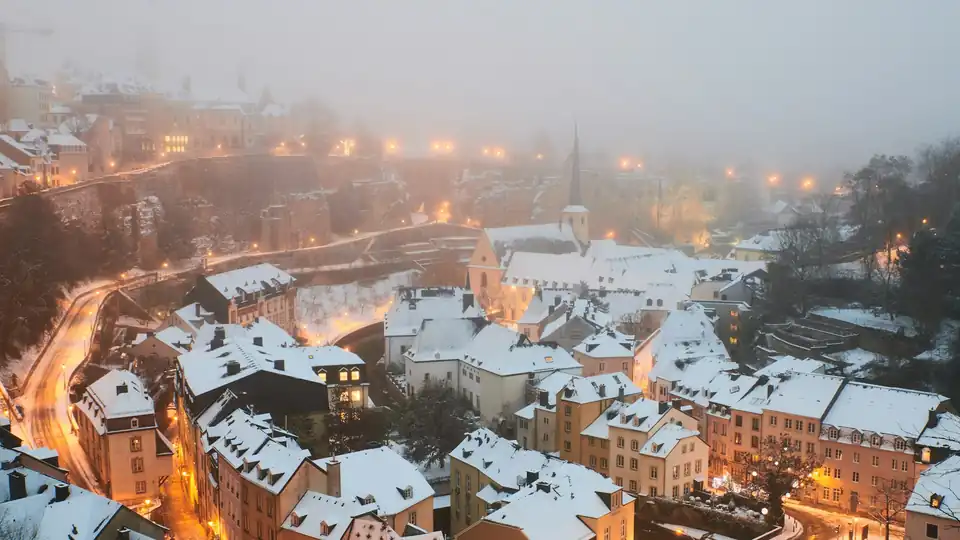
The Christmas markets in Luxembourg City, spread across several squares including Place Guillaume II and Place d'Armes, run for several weeks before Christmas and are a major part of the city's winter atmosphere; see our guide to winter in Luxembourg for what to expect around heating, daylight and the season generally. Public holidays close out the year with Christmas Day and Saint Stephen's Day on 25 and 26 December.
School holidays
School holiday dates are set separately by the Ministry of Education for each academic year and do not always align with public holidays; families should check the official school calendar for the specific year, since dates for autumn, Christmas, Carnival, Easter and summer breaks are published well in advance and change from one year to the next. This matters for relocating with children, since childcare and activity availability often shifts around these breaks rather than around the public holiday list itself.
Our take
For anyone moving to Luxembourg, the practical takeaway is simple: check the list of eleven holidays against your own employer's calendar, know that a holiday landing on a weekend is not lost time under Luxembourg law, and treat National Day eve as a fixture worth planning around rather than working through. If you are settling in and want a home well placed for the city's calendar of events, from the Schueberfouer on the Glacis to the Christmas markets in the old town, browse our current listings or contact us.
Sources
- Jours fériés légaux, Inspection du travail et des mines (ITM)
- Public holidays in Luxembourg, Wikipedia
- National Day and its traditions, Cour grand-ducale
- Jour férié un samedi ou dimanche ? Au Luxembourg, vous pouvez le récupérer !, LesFrontaliers.lu
- Traditional Customs and Festivals in Luxembourg, JustArrived.lu
- Traditions in Luxembourg City, Visit Luxembourg City
This article gives general practical information. Services, prices and rules change; check the current details with the operator or the commune concerned.