In this article
The legal weekday and Saturday hours
Retail shop opening hours in Luxembourg are governed by national commerce rules, administered through Guichet.lu, the government's business services portal. On weekdays, shops must close by 20:00, though a shop can extend to 21:00 once a week if it chooses. On Saturdays, and on the day before a public holiday, the closing time moves earlier, to 19:00, and earlier still, to 18:00, on New Year's Eve, Christmas Eve and the day before National Day. Collective agreements in some sectors can extend the Saturday closing time to 20:00. Outside these hours, retail shops cannot receive customers, regardless of whether staff are still on the premises.
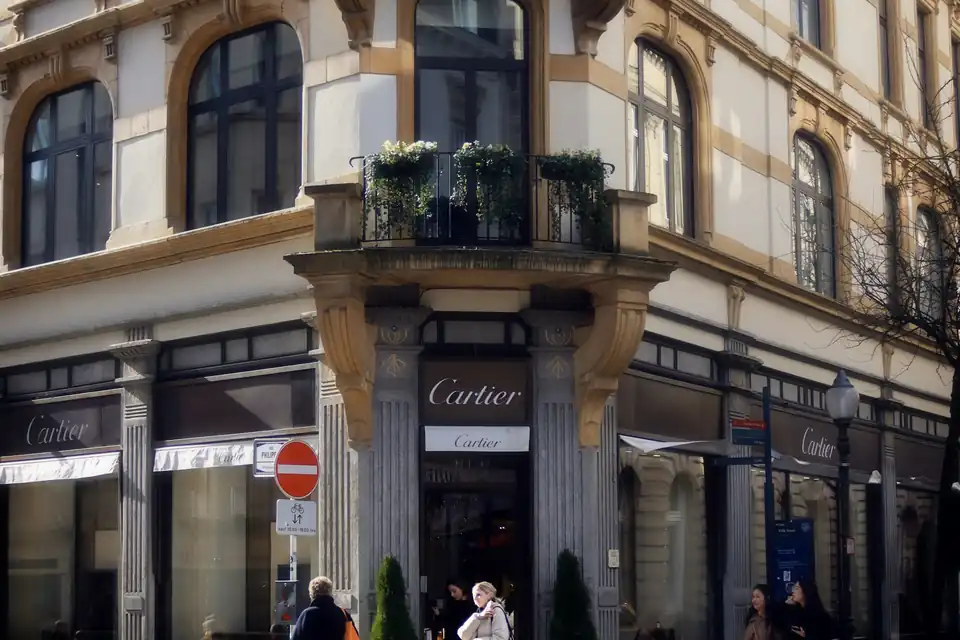
In practice, this means most supermarkets and city-centre shops in Ville Haute and the surrounding shopping streets close around 19:00 to 20:00 on weekdays, earlier on Saturdays, and it is worth checking a specific shop's posted hours before a late errand, since not every shop uses the full time allowed.
Sundays and public holidays
Ordinary retail is closed to customers on Sundays and public holidays, with the rules specifying that customers cannot be admitted to shops before 06:00 or after 13:00 on these days. In effect, unless a shop falls under one of the exceptions below, Sunday shopping in Luxembourg simply does not happen the way it might in some neighbouring cities, and most shopping centres and department stores are closed all day.
Shops allowed to open on Sunday until 18:00
A specific list of shop types can extend their Sunday and holiday opening until 18:00 rather than closing at 13:00, including:
- butchers, bakeries and cake shops (boulangeries, pâtisseries)
- delicatessens and catering or takeaway food services
- tearooms, and shops selling newspapers, tobacco or souvenirs
This is why a fresh bakery or a corner shop selling papers and snacks is often the only thing genuinely open on a Sunday afternoon in most quarters.
Businesses exempt from the closing-time rules altogether
Certain categories are not covered by the general closing-hour rules at all, because their activity is considered continuous or exceptional:
- hotels, restaurants and cafés (the HORECA sector)
- shops located inside train and bus stations, and at the airport
- vehicle repair workshops and fuel or spare-parts sales
- cinemas and retail within cinema complexes
- fairground and market traders at authorised events
This is one reason a small supermarket inside Luxembourg City's central station can open later and on Sundays when an identical shop two streets away cannot.
One-off exemptions
A shop owner can apply for an individual 24-hour exemption from the closing rules once a year, typically for a promotional event, by submitting a request to the General Directorate for Small and Medium-Sized Enterprises at least a month in advance. This explains occasional "exceptional Sunday opening" signs around sales periods.
Supermarkets and where to actually shop late or on Sunday
Larger supermarket chains generally close around 19:00 to 20:00 on weekdays and earlier on Saturdays, in line with the general rules, and most do not open on Sunday except where they qualify under a specific exception, such as a location inside a station. Smaller convenience shops attached to petrol stations often stay open later into the evening and on Sundays, since fuel-related sales fall under a different regime, making them a reliable fallback for essentials outside normal hours.
If you are catering a last-minute Sunday meal, the weekly markets and the exempted bakeries and delicatessens are usually your best options rather than a large supermarket.
Pharmacies and the duty rota
Pharmacies in Luxembourg operate on their own separate system from general retail. Each pharmacy keeps its own regular hours during the week, closing in the evening like most shops, but a rotating duty system, the pharmacie de garde, guarantees that at least one pharmacy in each region stays open through the night and on Sundays and public holidays. According to Editus.lu, the on-duty rota runs from 08:00 to 08:00 the following day, and the current list of duty pharmacies, with addresses and phone numbers, is published daily on sites such as editus.lu and pharmacie.lu, as well as posted on the door of every closed pharmacy. If you need medication outside normal hours, checking one of these listings, or calling the emergency number posted at your nearest pharmacy, is the fastest way to find the nearest option.
Practical tips for newcomers
A few habits make the system easier to live with:
- Do your main grocery shop before 19:00 on weekdays or before Saturday afternoon, since most supermarkets will already be closed by early evening.
- Keep a bakery or station shop in mind for Sunday mornings, since these are reliably open until early-to-mid afternoon under the extended-hours exception.
- Check a shop's specific hours online before a special trip, since not every retailer uses the full closing time the law allows, and many independent shops close for a lunch break as well.
- Save a duty pharmacy website or app so you are not searching for one at short notice.
Petrol stations and 24-hour options
Petrol station shops attached to the main routes into and out of the city are, in practice, the closest thing Luxembourg has to a 24-hour convenience store, since fuel-related retail sits outside the general commerce closing rules. They tend to carry a basic range of groceries, snacks, drinks and household essentials, at a premium compared with a supermarket, but they are a genuine option late at night or early on a Sunday morning when almost everything else in the city is shuttered. If you live in a quarter without one nearby, it is worth knowing the closest one on your regular route rather than discovering it only when you need it.
How this compares with neighbouring countries
Newcomers arriving from countries with more liberal Sunday trading, or from cities where late-night shopping is routine, often find the Luxembourg system stricter than expected at first and then come to appreciate the quieter Sundays it produces. Germany has historically applied similarly firm restrictions, so residents commuting from or shopping across that border will recognise the pattern, while France allows somewhat more Sunday trading in certain zones. None of the three countries around Luxembourg matches the more permissive hours found further north in Europe, so this is very much a regional norm rather than an unusual local quirk.
Our take
The short version: plan your shopping around a working week that closes earlier than you might expect, and around a Sunday that is genuinely quiet outside bakeries, station shops and restaurants. It rarely causes real problems once you know the pattern, and it is part of a slower pace to weekends that many residents come to appreciate. For more on the rhythm of daily life once you have settled in, see our guide to the first week in Luxembourg, or contact us if you are still looking for a home in a quarter well placed for everyday shopping.
Sources
This article gives general practical information. Services, prices and rules change; check the current details with the operator or the commune concerned.