In this article
Where it is
Limpertsberg occupies the plateau immediately north of the old town, separated from it by the Glacis and the Kinnekswiss parkland. To the east it looks across the Alzette valley towards Kirchberg; to the west it meets Rollingergrund and the green slopes above the Pétrusse.
That position explains most of its character. It is close to the centre without being part of it, high enough to be bright, and on the direct tram line between the station, the old town and Kirchberg. For our full description of the quarter itself, see our Limpertsberg page.
The streets and the housing
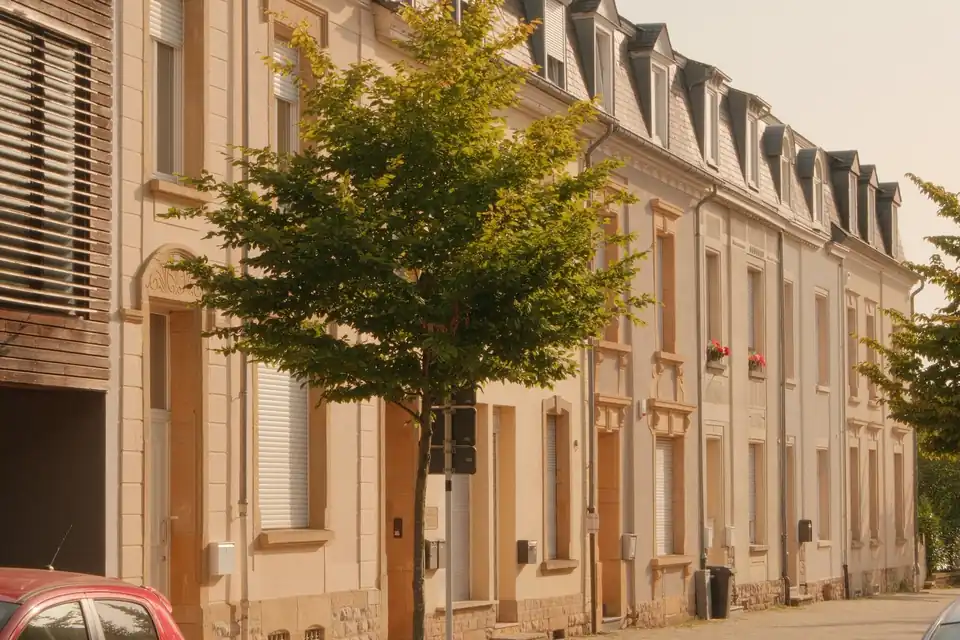
Limpertsberg was largely built from the late nineteenth century onwards, and it shows. The main avenues are broad and lined with mature trees, with substantial town houses and apartment buildings, many of them later divided into flats. Newer residential buildings fill the gaps.
For a newcomer, that stock has a practical consequence. Large older houses divided into several units create a deep market for rooms and shared flats, often in buildings with high ceilings and generous windows. Alongside them, one- and two-bedroom apartments in post-war and recent buildings provide the family and couple market.
What you will find less of: large new-build developments and modern studios in quantity. Those are more typical of Kirchberg, Gasperich or the station area.
A normal weekday
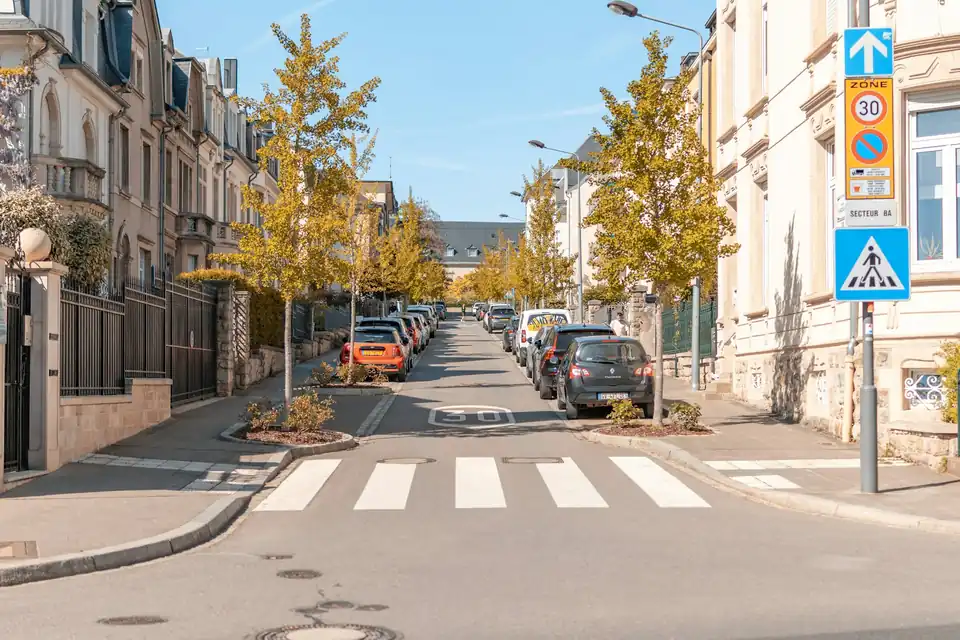
The rhythm of Limpertsberg is residential. Mornings are busy with school runs and people walking to the tram; the university campus adds students around its buildings. During the day the streets are quiet. Evenings are calm, with neighbourhood cafés and restaurants rather than bars that run late.
Grocery shopping is local: supermarkets and small shops on the main streets cover daily needs, and the old town's shops are a short walk or tram ride away. For larger shopping, residents often go to Kirchberg by tram.
The Glacis, Kinnekswiss and the park along the edge of the old town are the quarter's green spaces, used for running, walking and weekend afternoons.
The Schueberfouer and the Glacis
Every year, from late August into September, the Glacis becomes the site of the Schueberfouer, Luxembourg's great funfair, which dates back to the fourteenth century. For three weeks the quarter changes character: crowds, traffic, noise until late, and an atmosphere many residents enjoy.
If you are viewing a flat near the Glacis, ask about it. For some people, living next to the fair is part of the charm. For others, especially those with young children or early starts, three weeks of evenings with rides and music is worth knowing about in advance.
Getting around
The T1 tram runs along the edge of Limpertsberg, with stops including Place de l'Étoile nearby. From there, the tram reaches the old town and the station in one direction, and Kirchberg and the airport in the other. The AVL bus network covers the rest of the quarter. All public transport in Luxembourg is free, which we explain in our guide to free public transport.
Walking to the old town takes a few minutes from the southern streets. Cycling works well on the plateau, less well on the climbs down to the valleys.
Parking is a real constraint in the older streets. Residents can apply for a residential parking permit from the City, but spaces are limited; if you have a car, a flat with a garage or a rented space makes daily life easier.
Who it suits
- Professionals on a first posting who want a calm base on the tram line, close to both the centre and Kirchberg.
- Students and academic staff at the university's Limpertsberg campus.
- People sharing a flat who want a pleasant street and larger rooms in older buildings.
- Couples and families who value parks, schools and a residential atmosphere.
Who it suits less well
- People who want nightlife on the doorstep. Clausen, the Grund or the station area offer more.
- Those who need a modern apartment with lift and underground parking at a moderate price; that combination is scarcer here.
- Anyone for whom three weeks of the Schueberfouer next door would be a problem.
Renting in Limpertsberg
Rooms in shared flats and in divided houses are the most available segment. They let quickly, particularly from late summer as the academic year and new job contracts begin. Apartments for couples and families also move fast, and prices are firm, reflecting the address and the tram.
When viewing, check the heating in older buildings, which can be less efficient, and ask for the energy certificate. Our viewing checklist covers the rest. If you are sharing, read our guide to the colocation rules before signing a joint lease.
Questions we are often asked
Is Limpertsberg good for students?
Yes. The university's Limpertsberg campus is in the quarter, and the supply of rooms in divided houses and shared flats is one of the best in the city.
When is the best time to look for a room?
Earlier than you think. Demand peaks from July to September, as new contracts and the academic year start. Looking in spring, or being ready to sign quickly in summer, makes a real difference.
Our take
Limpertsberg is where many of our tenants start, and it is where several of our rooms are, for good reasons: it is calm, central, well connected and easy to understand for someone new to the city. It is not the most exciting quarter, and it does not pretend to be. For a first year in Luxembourg, that is often exactly what people need.
See the rooms available in Limpertsberg or compare it with the neighbouring quarters in our guide to the 24 quarters of Luxembourg City.