In this article
Where it is
Hollerich lies to the west and south-west of the central station, between the railway, the Pétrusse valley, Merl and Cessange. It is crossed by main roads towards the south and west of the country. For our overview of the quarter, see our Hollerich page.
What the quarter is like today
Hollerich is a patchwork, and that is its character.
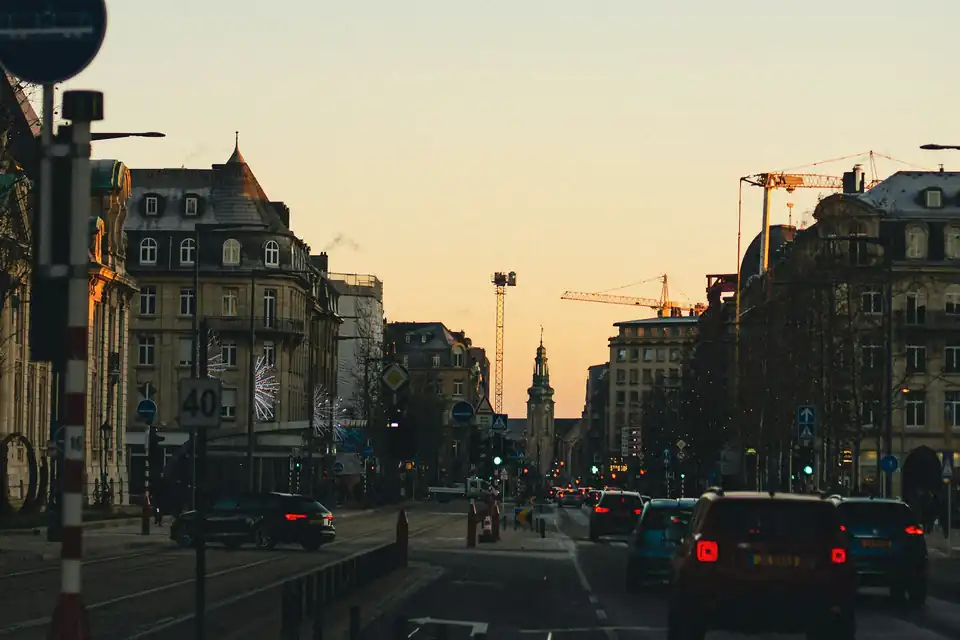
- Along the main roads there are offices, car dealerships, hotels and commercial buildings, with the traffic that goes with them.
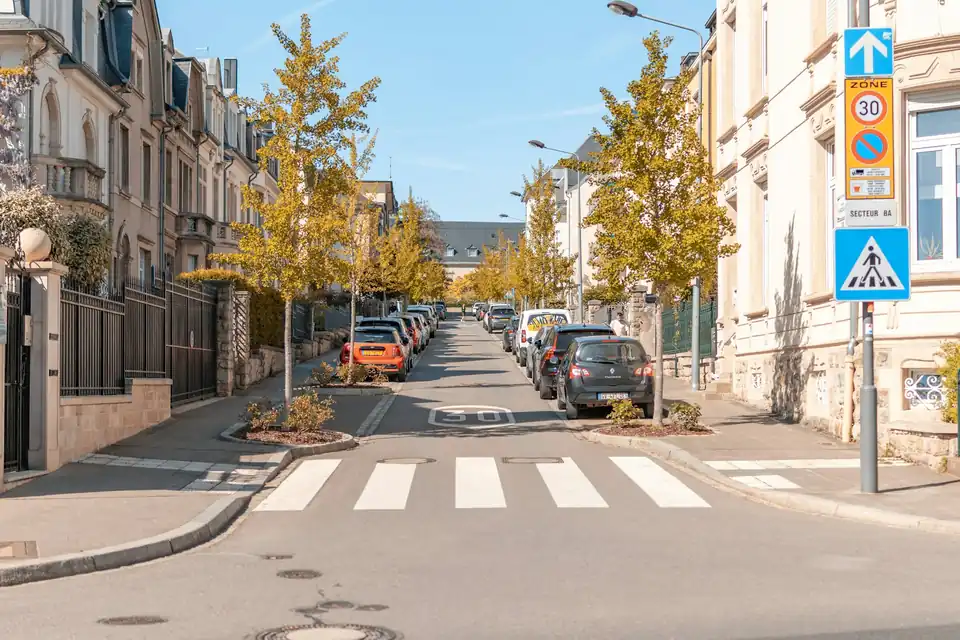
- In the side streets there are residential buildings of different ages, and pockets of older, village-like streets that remind you Hollerich was once a separate village outside the city.
- Culture and nightlife have a long history here. Den Atelier, one of the country's main concert venues, is in Hollerich, and the quarter has long been associated with evening life.
It is not a quarter for postcard walks. It is a quarter where rents can be more accessible than in the centre, and where the station, the tram and the bus network are close.
Getting around
Hollerich's main advantage is proximity to the central station, with national and international trains and the T1 tram. Several AVL bus lines cross the quarter towards the centre, Merl, Cessange and the south. All public transport is free.
For drivers, Hollerich is easier than the centre: access to the main roads and the motorway network is direct, and parking, while not easy, is less constrained than in the old town or the valley quarters.
Nei Hollerich: the neighbourhood being built
The most important thing to know about Hollerich is what is planned. Nei Hollerich is the redevelopment of a 21-hectare former industrial site, largely the land of the engineering group Paul Wurth, just behind the central station.
According to the project's promoters and reporting in September 2026:
- about 2,200 homes are planned, for roughly 6,000 residents, alongside offices for several thousand workers;
- around 10% of the homes are intended to be affordable housing;
- works begin in 2026, the first building is expected around 2029, and first residents around 2030;
- the full development will take about twenty years;
- a future tram connection and reinforced rail services are part of the plan;
- some historic industrial structures will be preserved as part of the new quarter.
The development is coordinated by an economic interest grouping formed by the landowners. It aims at high sustainability standards and has received a pre-certification at the highest level of the German DGNB scheme.
What it means for residents and buyers
A project of this size will change Hollerich profoundly over the next two decades.
- For residents today, it means construction nearby for many years, and in time new public spaces, shops, services and transport.
- For buyers, it is the kind of long-term change that can reshape a quarter's appeal. It is also a long horizon, and the first phase only begins to deliver homes at the end of the decade. Buying in Hollerich today is buying the present quarter, with the future as a possibility rather than a certainty.
- For renters, the near-term effect is limited. Existing rents reflect today's Hollerich.
When a large project is announced, listings nearby sometimes lean on it heavily. Ask what exists today within five minutes' walk, and treat the future quarter as a bonus rather than the basis of the price.
Housing today
Hollerich's housing is mixed: older apartment buildings, some houses in the older streets, and newer residential buildings along the main roads. Units vary widely in quality, which makes viewings important. Check noise from the main roads and from nearby venues, and ask for the energy certificate. Our viewing checklist helps.
Who it suits
- People who work near the station or commute by train, and want an alternative to the busier Gare streets.
- Residents with a car who need road access as well as public transport.
- Music lovers and people who enjoy the quarter's evening life.
- Longer-term buyers who understand and want to be part of the Nei Hollerich transformation.
Who it suits less well
- Those looking for green, quiet residential streets. Merl or Belair, next door, fit better.
- Anyone put off by years of construction nearby.
Questions we are often asked
Is Hollerich the same as the Gare quarter?
No, though they are neighbours and the boundary is not obvious on the ground. The Gare quarter is built around the station and the Avenue de la Liberté; Hollerich lies further west and south-west, with more offices, workshops and main roads, and its own older streets.
Should I buy now because of Nei Hollerich?
Only if the home makes sense on its own terms today. The new quarter will be built over about twenty years, and its effect on the surrounding streets will come gradually. Buying because of a future project is a bet on timing; buying a good home in a well-connected quarter is a sounder basis.
Is it noisy?
Near the main roads and the venues, it can be. Side streets are quieter. As always, the exact address matters more than the name of the quarter.
Our take
Hollerich is a practical quarter today and a changing one tomorrow. It deserves more attention than its reputation suggests, particularly from people who value the station and the road network. The Nei Hollerich project is the most significant new neighbourhood planned in the capital, but it is a story that will unfold over twenty years.
For comparisons with its neighbours, see our guides to the Gare quarter and to Merl and Cessange, or browse our current listings.