In this article
The Luxembourgish public system
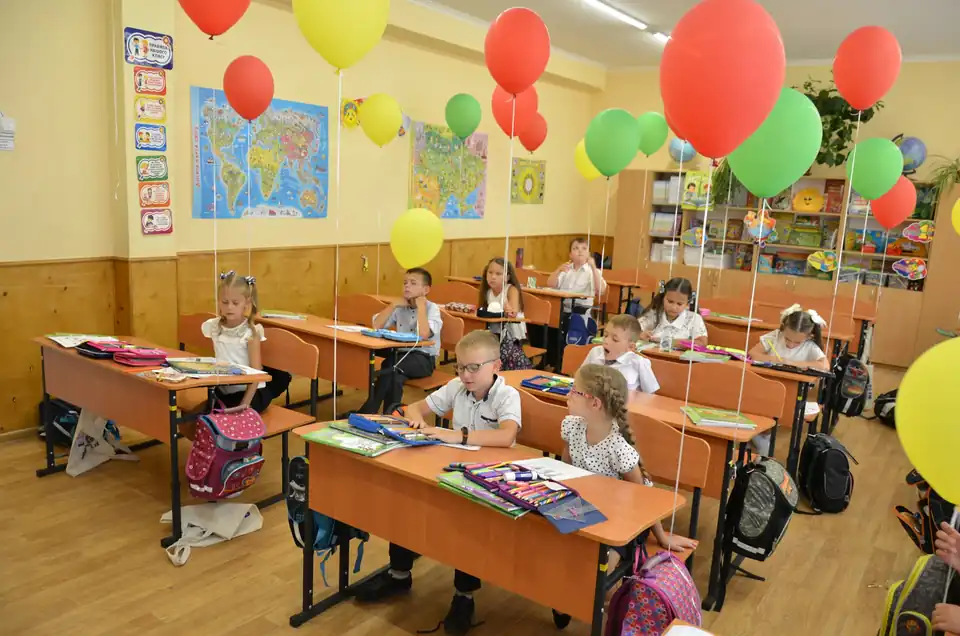
Public schooling in Luxembourg is free, from primary through secondary school.
- School is compulsory from age 4. A free, optional early-education year (précoce) is available from age 3 in most communes.
- Primary school (école fondamentale) is organised in four cycles and run by the commune where you live. Your address therefore determines your local school.
- Languages. Luxembourgish is the language of daily life in the early years. Children learn to read and write in German in primary school, French is introduced progressively, and French becomes more important in secondary school. English is added later.
- Compulsory schooling is being extended from 16 to 18 years, with the change applying from the 2026-2027 school year to pupils within its scope.
A reform voted in December 2025 will allow families to choose between German and French as the language in which their child first learns to read and write. According to published guidance, it is being introduced progressively, starting at cycle 2.1 from the 2027-2028 school year.
Since September 2022, after-school care and canteen meals for primary pupils are free during school periods, which makes the public system particularly practical for working parents. See our guide to childcare and the chèque-service accueil.
Many international children thrive in the local system and leave it fluent in several languages. It asks more of children who arrive at eight or ten without German or French, and schools offer reception classes and support for newcomers.
The public international schools
Over the past decade, Luxembourg has opened a network of public international schools that follow the European curriculum in several language sections, and are free, like the rest of the public system. According to the Ministry of Education, they include:
- the International School of Differdange and Esch-sur-Alzette;
- the Lënster Lycée International School in Junglinster;
- the Edward Steichen International School in Clervaux;
- the International School of Mondorf-les-Bains;
- the Anne Beffort International School in Mersch, for secondary;
- the Gaston Thorn International School in Luxembourg City.
The Michel Lucius school in Luxembourg City also offers an English-language international programme.
Places are in demand. Admission rules, language sections and deadlines differ from school to school, so apply as early as possible, ideally before you choose a home.
The European Schools
The two European Schools of Luxembourg, Luxembourg I in Kirchberg and Luxembourg II in Mamer, primarily serve the children of staff of the EU institutions, for whom schooling is free. Other families can sometimes obtain places, subject to availability and fees. If one parent works for an EU institution, the European School is usually the natural choice.
Private international schools
Luxembourg also has private international schools offering British, American, International Baccalaureate, French, German, Montessori and other curricula. Fees vary widely by school and level; published estimates put them roughly between €5,000 and €25,000 a year. Some employers contribute to school fees as part of relocation packages, which is worth asking about before accepting an offer.
How school choice shapes where you live
Luxembourg is small, but a daily school run across the city at rush hour is not. A few principles help.
- For the local public school, your commune and address determine the school. Choose the quarter with the school in mind.
- For an international or European school, look at the journey first. Kirchberg is convenient for Luxembourg I; the western side of the city and nearby communes for Mamer; the south for Differdange and Esch.
- Check the transport. Many international schools run school buses, and the public network, free for everyone, covers much of the country. Our guide to free public transport explains how it works.
- Ask about the after-school offer, especially for younger children.
Our neighbourhood guides describe which quarters suit families, and our articles on Merl and Cessange and the eastern quarters look at family-oriented areas in detail.
A timeline for arriving families
- As soon as the move is confirmed, contact the schools you are considering. International schools have admission windows and waiting lists.
- Register with the commune on arrival; public schooling follows your registration. Our guide to registering with your commune explains the procedure.
- Choose your home with the school journey in mind.
- Arrange childcare for younger children, using the chèque-service accueil.
Arriving mid-year is possible in all systems, but international schools may have no places in popular sections. Ask about reception classes in the local public schools as a fallback.
Questions we are often asked
Can my child switch from an international school to the local system later?
Yes, but the later the move, the more the languages matter. Schools offer support, and the ministry provides guidance for families changing systems.
How do I know which public school my child will attend?
In the local public system, primary schools are organised by the commune, and your address determines the school. Contact the commune's education department after registering; it will tell you the school and the enrolment steps.
Is secondary school also free?
Yes, in the public system, including the public international schools.
Our take
Luxembourg offers more free schooling choices than most countries its size, thanks to the public international schools. The challenge is not the quality of the options but the logistics: places, deadlines and daily journeys. Families who settle the school first and the flat second tend to have an easier first year.
If you are relocating with children, tell us the school you are considering and we will suggest quarters and homes that make the daily journey simple. See our current listings or contact us.
Sources
This article gives general practical information and is not legal or tax advice. Procedures, amounts and deadlines change; check the current rules on guichet.lu or with the administration concerned.