In this article
- Mühlenbach: almost no offices, almost no traffic
- Pulvermühl: the smallest and most secluded
- Weimerskirch: a village a thousand years old, next to Europe's busiest plateau
- Dommeldange: an industrial past, a forest today
- Cents: settled, local and slightly removed
- Hamm: woodland, a memorial and very little else
- Bambësch and the Grünewald: quiet by way of the forest
- Aircraft and road noise: what actually affects which streets
- How to check noise before you sign
- Our take
Mühlenbach: almost no offices, almost no traffic
Mühlenbach, Millebaach in Luxembourgish, takes its name from the stream that once drove mills through its small valley in the north-west of the city. With around 2,500 residents across 2.4 square kilometres, much of it green slopes and woodland, it has almost no offices, few shops and little traffic beyond what belongs to the quarter itself. Housing is mostly older houses and small apartment buildings that rarely come to market. The cost of the calm is convenience: daily shopping means a trip to Eich, Limpertsberg or Rollingergrund, and the valley's slopes make walking and cycling more demanding. See our guide to Rollingergrund and Mühlenbach.
Pulvermühl: the smallest and most secluded
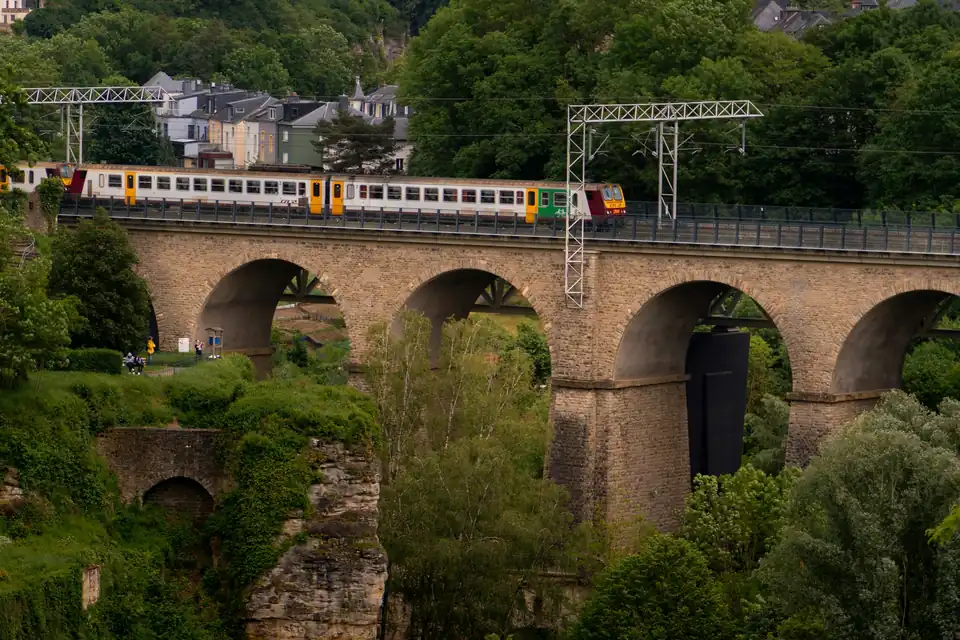
Pulvermühl is the smallest quarter of Luxembourg City by population, with fewer than 400 residents on about 25 hectares in the Alzette valley east of Clausen. Its name, meaning "powder mill" in both Luxembourgish and German, recalls the gunpowder mill that once supplied the city's fortress. Parts of the quarter are genuinely peaceful, along the river and its footpaths; others sit closer to the railway viaduct and the valley road, so position matters enormously here. Listings are rare, and prices vary widely depending on distance from the road and the railway. Our guide to the eastern quarters covers Pulvermühl alongside Hamm and Cents.
Weimerskirch: a village a thousand years old, next to Europe's busiest plateau
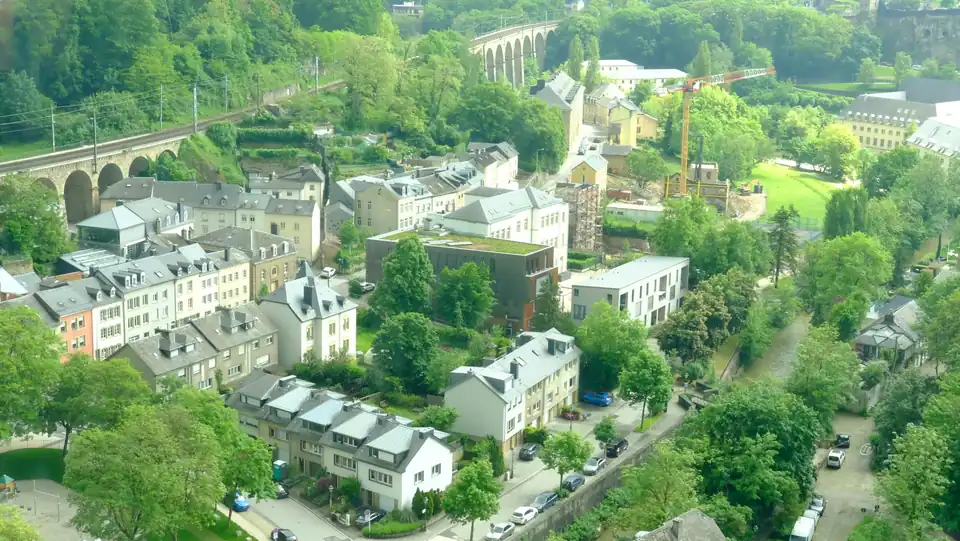
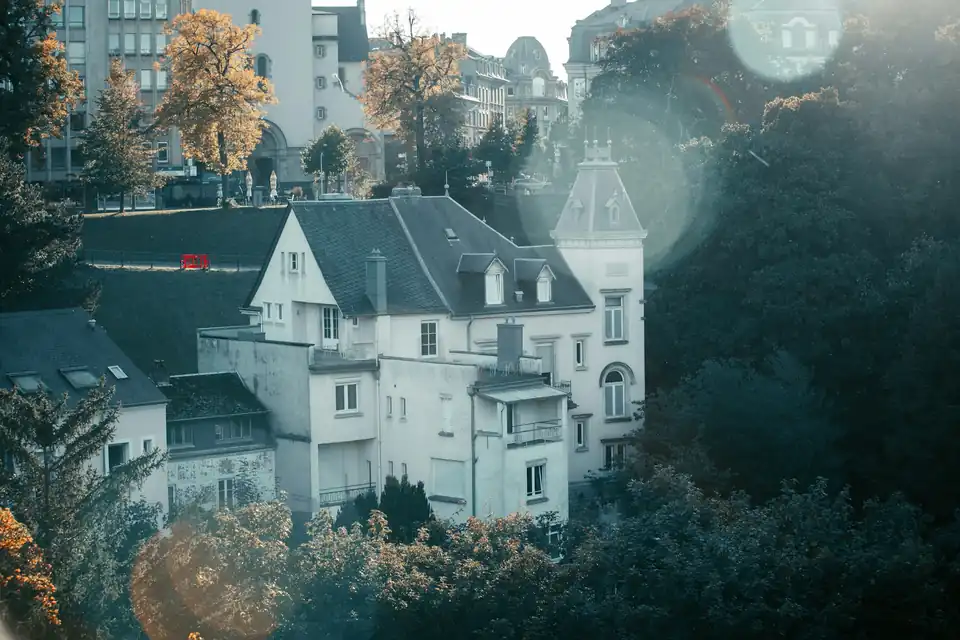
Weimerskirch is one of the oldest settlements in the capital, first recorded in 723 as an estate given to Charles Martel, and its parish church, Saint Martin's, remains the quarter's centre. Around 2,500 people live here on 1.1 square kilometres of village streets on the slope between the Alzette valley and the Kirchberg plateau, with almost no offices despite sitting just below one of Europe's busiest business districts. For people working at Kirchberg, that means a quieter, often more affordable address a short, fairly steep walk or bus ride from the office. See our guide to the northern valley quarters.
Dommeldange: an industrial past, a forest today
Dommeldange's history is industrial rather than sleepy: it was a centre of steelmaking from the seventeenth century, and pioneered electric steel production in the early twentieth. Today its 3,100 residents live across 2.4 square kilometres bordered by the Grünewald forest, with a park near the historic Collart castle adding to the green feel. Rents are generally more moderate than on the plateau above, and the quarter's own railway station is a genuine asset for train commuters. The trade-off is the valley road and the railway corridor itself, which affect noise on some streets, so it pays to check exactly which street a home sits on. See our guide to the northern valley quarters.
Cents: settled, local and slightly removed
Cents is the only quarter of the capital where Luxembourgish nationals form a majority of residents, which gives it a distinctly local, settled character compared with the international centre. Around 6,600 people live on the plateau, in family houses and low apartment buildings with wooded slopes at the edges. Shopping is local and evening life limited, both of which contribute to the quiet. Some streets are steep, and a planned cycle and pedestrian bridge to Kirchberg, targeted for 2028, would eventually shorten what is currently a longer bus journey to the business plateau.
Hamm: woodland, a memorial and very little else
Hamm is one of the least densely populated quarters in the city, with around 1,600 residents spread across some 4 square kilometres, much of it woodland, green space and institutional land, including the Luxembourg American Cemetery and Memorial, one of the most visited and most tranquil sites in the country. Housing leans towards houses and larger apartments with gardens, and evening life is essentially absent. The quarter's calm comes with two specific caveats: local shops are limited, so a car or a well-planned bus routine matters, and some streets sit closer to flight paths from the nearby airport, so it is worth visiting at different times of day before deciding.
Bambësch and the Grünewald: quiet by way of the forest
Several of the calmer quarters, Rollingergrund, Mühlenbach and the northern valley quarters, border two large wooded areas: the Bambësch, at the upper end of the Rollingergrund valley, and the Grünewald, stretching along the northern edge of Kirchberg and Dommeldange. The Bambësch, reached by bus 275 to the Bambësch-Centre sportif stop, includes a 2.7 km exercise trail with 18 stations and a 5.5 km cross-country trail, according to the City of Luxembourg, alongside a large forest playground. Living on the edge of either forest generally means genuine quiet at night, at the cost of a longer walk to shops and public transport than the plateau quarters offer.
Aircraft and road noise: what actually affects which streets
Quiet is rarely absolute in a small, hilly capital, and two sources of noise matter more than others.
- Aircraft noise affects streets closest to the flight paths into and out of Findel airport, felt most in parts of Hamm, Cents and some streets in the eastern quarters, and varies with wind direction and time of day.
- Road and rail corridors run through several otherwise calm valley quarters, so a street two minutes from a main road or a railway line can be noticeably louder than one three streets away in the same quarter.
Neither is visible on a map, which is why a viewing at a different time of day, ideally including a weekday evening or an early morning, tells you more than the listing photos ever will.
How to check noise before you sign
- Visit at more than one time of day. A street that feels calm on a Tuesday afternoon can be different at rush hour or on a weekend evening.
- Open the windows during the viewing, weather permitting, and ask directly whether the agent or landlord knows of any recurring noise, from traffic, flights, a nearby school or bars.
- Check the building's position relative to a main road, a railway line or a flight path using a map, not just the street name.
- Ask how old the windows are. Double glazing in an older building makes a real difference to what you hear indoors.
Our take
Genuine quiet in Luxembourg City usually means trading some convenience: a longer walk to shops, a bus rather than a tram, or a car for the weekly shop. Mühlenbach, Weimerskirch and Dommeldange offer that trade close to the centre and Kirchberg; Cents and Hamm offer more space further out; Pulvermühl is a rare, specific opportunity rather than somewhere to search broadly. Tell us how much quiet matters to you against how far you are willing to travel, and we can point you to the right streets, not just the right quarter. See our current listings or contact us.